
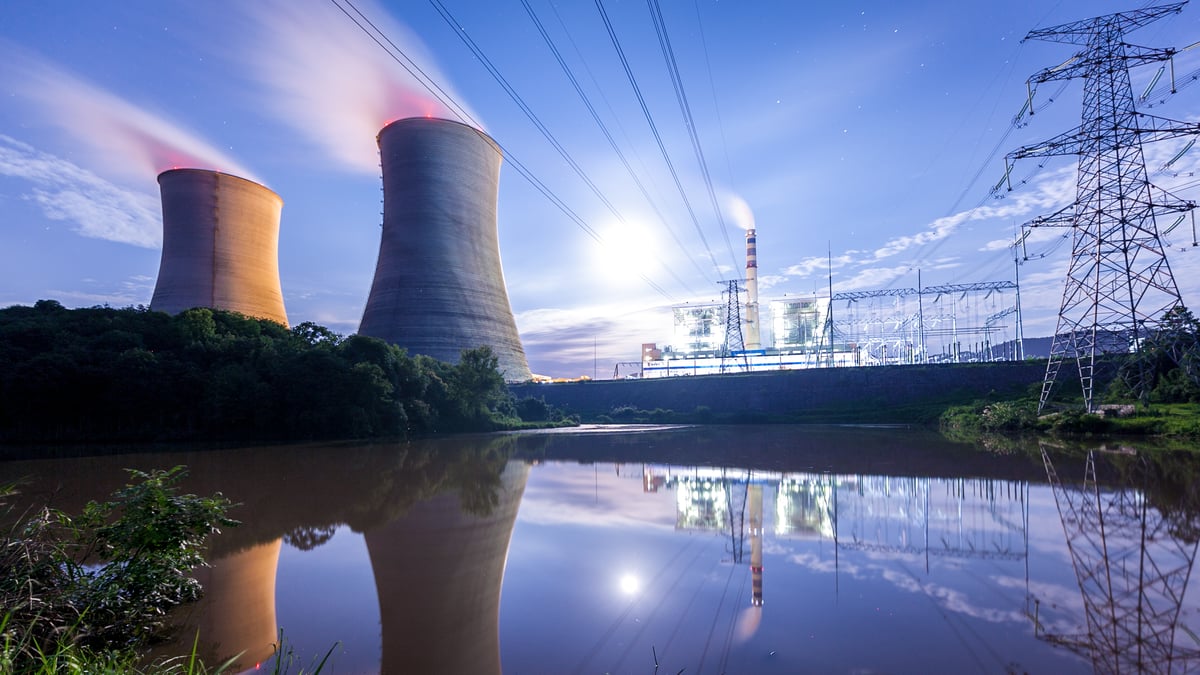
AI's Power Appetite Sparks Nuclear Revival: Constellation Energy and NextEra Eye Windfall
Artificial intelligence data centers are reshaping America's energy landscape, forcing tech giants to seek alternatives beyond traditional power grids. As AI computational demands surge, projections show data centers will consume between 6.7% to 12% of all U.S. electricity by 2028—a staggering increase that has sent major technology companies scrambling to secure stable, clean power sources. Nuclear energy has emerged as the preferred solution, with Microsoft, Meta, and Alphabet leading a wave of corporate investment in nuclear power plants. This structural shift is creating significant profit opportunities for utilities positioned to capitalize on long-term power purchase agreements and government support for nuclear expansion.
The AI Energy Crisis: Scale and Urgency
The computational intensity of modern artificial intelligence systems presents an unprecedented challenge for America's electrical infrastructure. Unlike traditional data centers that can operate with variable power loads, AI data centers require constant, reliable baseload power to maintain training operations and inference services. Current projections underscore the severity of the challenge:
- Data center electricity consumption expected to reach 6.7% to 12% of U.S. total energy by 2028
- Represents potential doubling or tripling of current consumption levels within the next four years
- Equivalent to the power consumption of major metropolitan areas
- Current grid capacity already stressed during peak demand periods in many regions
The problem extends beyond mere kilowatt hours. AI workloads are geographically concentrated, with major tech companies clustered in regions like Northern Virginia, the Pacific Northwest, and Northern California. This geographic concentration strains regional transmission infrastructure and creates local grid reliability concerns. Traditional fossil fuel plants face environmental scrutiny and lengthy permitting timelines, while renewable sources like solar and wind cannot provide the consistent 24/7 baseload power that AI operations demand.
Nuclear energy addresses these constraints elegantly: it produces zero carbon emissions, operates continuously regardless of weather conditions, requires minimal physical footprint relative to power output, and can be scaled regionally to match demand patterns. The technology has also benefited from three decades of safety innovations and operational experience.
Corporate Nuclear Pivot and Utility Positioning
What began as isolated energy discussions has crystallized into concrete corporate commitments. Microsoft announced plans to develop new nuclear capacity, securing options for reactor output. Meta signed agreements to source nuclear power for its expanding AI infrastructure. Alphabet's Google began evaluating partnerships with nuclear operators to meet its climate goals and power requirements simultaneously.
These commitments have sparked a renaissance in nuclear utility stocks, with two companies particularly well-positioned to capture the resulting demand:
Constellation Energy ($CEG) operates the largest fleet of nuclear reactors in the United States and has benefited from renewed investor confidence in nuclear power. The company is in active discussions with major technology companies regarding long-term power purchase agreements. Government support for nuclear expansion, including provisions in recent legislation for nuclear plant subsidies and tax credits, strengthens its competitive positioning.
NextEra Energy ($NEE) combines substantial nuclear operations with leading renewable energy capacity, positioning it as a comprehensive clean energy solution for corporate sustainability commitments. The company has already announced plans to expand nuclear operations to meet anticipated demand.
Market Context: The Broader Energy Transition
This nuclear pivot represents a dramatic reversal in energy sector narratives. For the past decade, renewable energy advocates pushed solar and wind as the primary clean energy solutions. However, the physics of AI power consumption has forced a reckoning: baseload power requirements that renewables alone cannot satisfy have rehabilitated nuclear's previously tarnished image.
The competitive landscape for utility companies has shifted accordingly:
- Traditional coal and natural gas operators face structural headwinds from power purchase agreement provisions favoring zero-carbon sources
- Renewable-only utilities must now navigate corporate demand for continuous baseload power
- Nuclear operators suddenly occupy the sweet spot between energy density, reliability, and environmental acceptability
- Smaller regional utilities face challenges competing for large corporate power contracts
Regulatory support has accelerated this transition. The Inflation Reduction Act included substantial nuclear subsidies, extending operating licenses for existing plants and supporting new construction. The Bipartisan Infrastructure Law allocated billions toward nuclear modernization and new projects. State-level renewable portfolio standards increasingly recognize nuclear as a qualifying zero-carbon resource.
Geopolitical factors also matter. Energy independence concerns and supply chain security have elevated nuclear's strategic importance relative to supply-dependent renewable manufacturing (solar panels, wind turbines). This has not gone unnoticed in Washington, where bipartisan support for nuclear expansion has strengthened.
Investor Implications and Market Dynamics
For equity investors, this shift creates compelling valuation opportunities in nuclear-heavy utility portfolios. Unlike renewable-focused utilities, which face commoditized power prices from the solar and wind glut, nuclear operators can negotiate substantial premiums through long-term corporate power purchase agreements. These multi-year contracts provide earnings visibility and reduce price volatility exposure.
The power purchase agreements emerging with tech companies typically include provisions for:
- Fixed pricing floors that protect utilities from market downturns
- Long contract durations (10-20+ years) providing stable cash flows
- Escalation clauses that partially offset inflation
- Minimum volume commitments that reduce volume risk
These contract terms transform nuclear utilities from commodity power producers into long-term contracted service providers—a fundamentally more stable business model.
However, investors should recognize execution risks. Nuclear projects face substantial capital requirements, regulatory approval timelines, and construction complexity. Supply chain constraints for specialized nuclear equipment could delay capacity additions. Public opposition to nuclear facilities, while declining, persists in certain regions.
Diversification benefits also merit consideration. Utilities traditionally exhibit defensive characteristics with stable dividends and lower volatility than broader equity markets. Adding exposure to utilities benefiting from AI infrastructure buildout combines this defensive profile with secular growth tailwinds—an unusual and attractive combination in the current market environment.
Looking Forward: A Reshaping of Energy Markets
The convergence of AI growth, climate imperatives, energy security concerns, and regulatory support has created a multi-year tailwind for nuclear-positioned utilities. The 6.7% to 12% data center power consumption projection for 2028 implies substantial incremental capacity additions must occur within a compressed timeframe. This mathematical reality leaves minimal alternative pathways—nuclear expansion is not merely preferred; it is operationally necessary.
Investors evaluating the sector should focus on companies with substantial existing nuclear fleets, proven ability to negotiate corporate power contracts, manageable balance sheets capable of funding expansions, and favorable regional regulatory environments. Constellation Energy and NextEra Energy currently represent the most obvious beneficiaries, though other utilities with nuclear exposure may capture secondary benefits.
The AI energy crisis, which appeared as a potential economic headwind mere months ago, has catalyzed an unexpected resurgence in one of American business's oldest and most capital-intensive sectors. For investors with appropriate risk tolerance and time horizons, this intersection of technological disruption and energy infrastructure transformation presents a rare opportunity to align portfolio positions with genuine structural market shifts.