
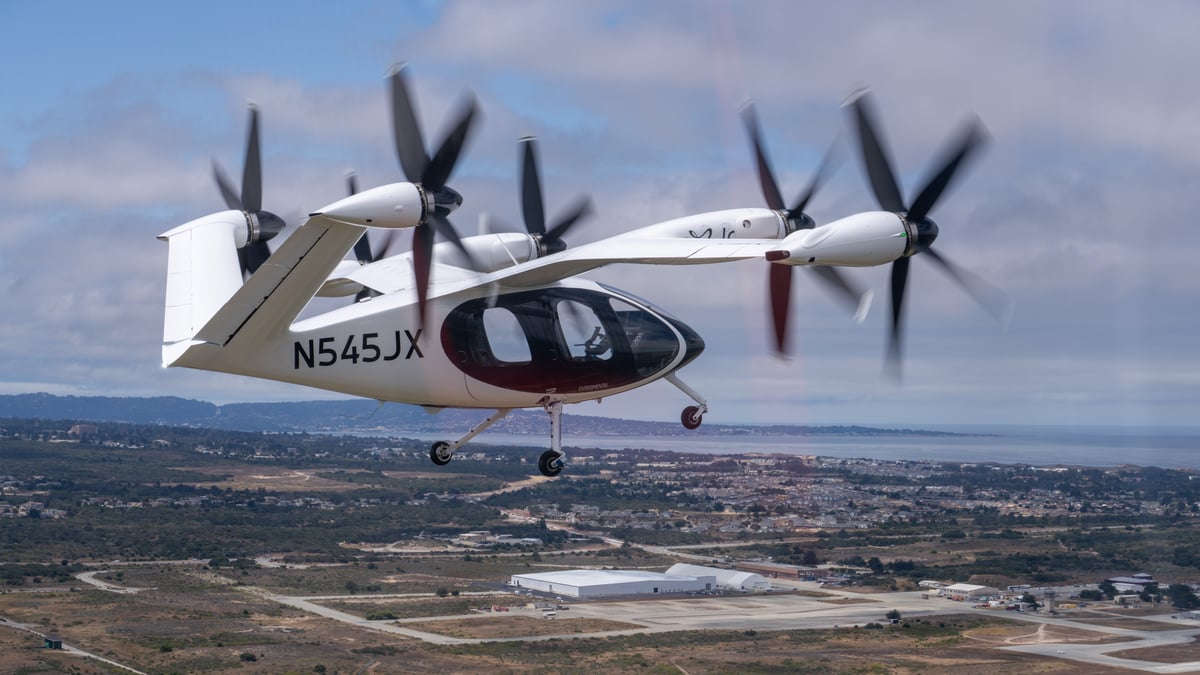
Uber and Joby's $5B Air Taxi Bet: Why This Electric Aviation Deal Matters
Uber Technologies and Joby Aviation have announced a transformative partnership to launch Uber Air, a commercial electric vertical takeoff and landing (eVTOL) service that represents one of the most ambitious forays into urban air mobility by a major transportation platform. The venture marks a watershed moment for the nascent eVTOL industry, combining Uber's unmatched ground-based mobility network with Joby's technological leadership and regulatory progress. Commercial operations are slated to begin in Dubai in the second half of 2026, with FAA certification expected the same year, positioning this venture at the cutting edge of aviation's electrification movement.
This partnership underscores how traditional mobility companies are hedging against an uncertain future by investing heavily in alternative transportation modes. For investors tracking the convergence of aviation, electric vehicles, and autonomous technologies, the Uber-Joby alliance signals that the eVTOL sector has matured beyond speculative startup territory into a space where serious capital and operational infrastructure are being deployed.
The Architecture of the Partnership
The deal structure reveals carefully calibrated risk management on both sides. Joby Aviation, valued at approximately $3.2 billion, brings its proprietary electric aircraft technology and advanced certification progress to the table. The company has been operating under a Special Conditions approval from the FAA, substantially de-risking the regulatory pathway compared to competitors still earlier in the certification process. Meanwhile, Uber ($UBER) contributes its operational backbone: a global platform with hundreds of millions of users, established relationships with municipalities and regulators, and proven expertise in managing logistics networks.
Key metrics from the partnership include:
- Commercial launch: Dubai, H2 2026
- FAA certification timeline: 2026
- Initial service model: Air taxi bookings integrated into Uber's existing app ecosystem
- Joby's current status: Advanced through Special Conditions; path to type certification well-defined
- Geographic expansion potential: Multiple markets targeted following Dubai launch
The partnership structure allows Joby to retain operational control of aircraft and maintain its vertically integrated model—a crucial differentiator in an industry where supply chain resilience will determine long-term profitability. Uber, meanwhile, gains first-mover advantage in integrating air mobility into its platform without bearing the full R&D and certification burden.
Market Context: A Crowded but Capital-Intensive Race
The eVTOL sector has attracted enormous venture capital and strategic investment over the past five years, but the path to profitability remains treacherously narrow. Companies like Archer Aviation ($ACHR) and Lilium ($LILM) are pursuing similar certification paths but operate from positions of relative disadvantage compared to Joby's maturity. The commercial eVTOL market is nascent—demand remains unproven, unit economics are uncertain, and regulatory frameworks continue evolving.
What makes the Uber-Joby partnership distinctive is its convergence of operational and technological strengths. Joby's advantages are substantial:
- Furthest advanced FAA certification: Operating under Special Conditions, significantly ahead of competitors
- Strategic partnerships: Relationships with Delta Air Lines and Toyota Motors provide capital, expertise, and distribution advantages
- Vertically integrated model: Controls aircraft design, manufacturing, and operations—reducing dependency on external suppliers
- Proven capital efficiency: Joby has demonstrated superior capital discipline compared to peers
Uber's contribution fundamentally changes the competitive landscape:
- Distribution network: Access to 130+ million monthly active users globally
- Operational expertise: Twenty years of managing complex logistics, driver-partner networks, and regulatory relationships
- Brand legitimacy: Consumer trust in Uber's mobility platform
- International relationships: Established government and municipal contacts in key markets
The Dubai launch location is strategically significant. The emirate has aggressively pursued becoming a hub for future mobility technologies, including autonomous vehicles and air taxis. It presents a regulatory environment more permissive than many U.S. or European jurisdictions, allowing faster deployment while building operational data and safety records that can support subsequent FAA certification.
Investor Implications: Risk-Adjusted Returns in a High-Stakes Venture
For equity investors, the partnership presents both opportunities and substantial risks that merit careful analysis:
Why this matters for Uber shareholders: The air taxi venture represents optionality on a transformative urban mobility future without materially straining balance sheet. Uber's core ridesharing business generates sufficient free cash flow to fund experimental ventures. If Uber Air succeeds at scale, it provides a new, potentially higher-margin revenue stream. If it fails, the capital commitment is survivable given Uber's market capitalization and operational cash generation. This is the profile of intelligent venture investment—asymmetric payoff with managed downside.
Why this matters for Joby shareholders: This partnership is transformative in scope. Joby transitions from a well-funded but operationally unproven venture to having a globally-scaled distribution and operational partner with proven execution capabilities. Uber's involvement substantially reduces the risk that superior technology fails to reach customers due to logistics, scaling, or go-to-market failures. Additionally, Uber's capital resources and operational expertise improve the probability of successful certification and commercialization.
Competitive implications: The partnership raises competitive stakes for Archer Aviation and other eVTOL developers. Those companies must now execute against a competitor backed by a company with proven operational scale and capital resources. This dynamic favors consolidated, well-capitalized players and disadvantages fragmented approaches. Investors in competing eVTOL ventures should assess whether those companies have equivalent strategic partnerships or capital advantages.
Market validation signal: Critically, Uber's partnership with Joby—rather than launching an independent eVTOL program or partnering with a lower-technology competitor—signals that the technology has matured sufficiently for major commercial deployment. This is likely to attract additional institutional capital to the sector and validate the fundamental thesis that electric urban air mobility represents a genuine market opportunity rather than pure speculation.
The Path Forward: Execution Risk Remains Paramount
While the strategic logic is compelling, investors must acknowledge that eVTOL commercialization remains largely unproven. Dubai 2026 is an aggressive timeline. Regulatory approval, aircraft manufacturing at scale, and operational launch all carry execution risk. The venture assumes sufficient demand for premium air taxi services—passengers must value time savings enough to pay substantially more than ground transportation.
The partnership succeeds only if Joby maintains its regulatory lead, successfully manufactures aircraft at commercial scale, achieves acceptable unit economics, and Uber integrates air mobility seamlessly into its platform. Any single failure cascades; conversely, successful execution at scale could represent a multi-billion-dollar market opportunity.
For investors, the Uber-Joby partnership represents a credible entry point into eVTOL market exposure through a vehicle backed by proven operational management. It's not a bet on speculative technology—it's a bet on two companies with complementary strengths executing an ambitious but achievable commercialization plan. Whether it succeeds will likely determine the trajectory of the broader urban air mobility sector for the next decade.