
Bitcoin Miner Pivots to AI Data Centers With $128M Deal—But High Risk Remains
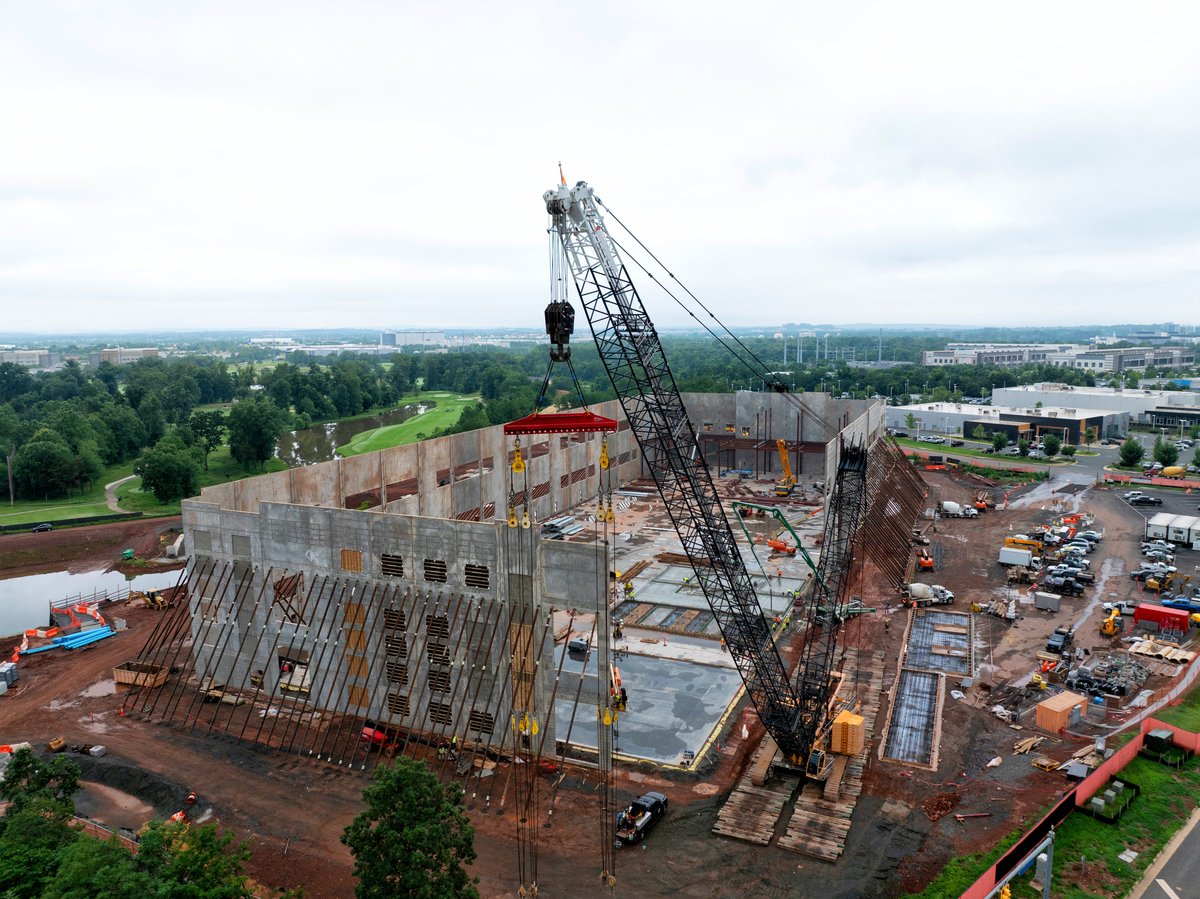
Bitfarms, a Canadian cryptocurrency mining company, is undertaking a dramatic strategic shift away from Bitcoin mining toward artificial intelligence data center infrastructure. The company has secured a $128 million deal to accelerate this transition, leveraging its substantial 2.1 gigawatts of energy capacity to capture the explosive demand for AI hosting services. While the move positions the company to capitalize on one of technology's fastest-growing sectors, analysts caution that steep competition from entrenched players and persistent operating losses present significant headwinds for investors considering the stock—currently trading near $2 per share.
Strategic Pivot and Financial Architecture
Bitfarms' shift from proof-of-work cryptocurrency mining to AI data center operations reflects a calculated response to evolving market dynamics. The $128 million transaction provides crucial capital to modernize infrastructure and build out AI-optimized facilities that can serve hyperscalers and enterprise customers seeking reliable, large-scale computing resources.
The company's most valuable asset in this transition is its substantial power infrastructure. With 2.1 gigawatts of available energy capacity, Bitfarms possesses the fundamental requirement for competitive data center operations:
- Abundant electrical supply: Critical differentiator in AI computing, where power consumption is paramount
- Established facilities: Existing infrastructure reduces capital expenditure compared to greenfield development
- Geographic positioning: Canadian operations offer regulatory stability and proximity to North American markets
- Operational expertise: Experience managing large-scale computational workloads provides operational advantages
This infrastructure foundation is theoretically sound, but translating capacity into sustainable profitability remains the central question for the business model.
Market Context: AI Boom vs. Entrenched Competition
The timing of Bitfarms' pivot coincides with unprecedented global demand for AI computing resources. Major cloud providers including Amazon Web Services (AWS), Microsoft Azure, and Google Cloud are expanding data center capacity at record pace, while specialized providers like CoreWeave, Lambda Labs, and others are capturing significant market share in GPU and AI-optimized infrastructure.
The AI data center market presents compelling opportunities:
- Explosive demand growth: Enterprises racing to deploy generative AI applications require massive computational capacity
- Premium pricing: AI workloads command higher rates than traditional cloud computing
- Long-term contracts: Enterprise customers increasingly lock in multi-year commitments
- Diversification potential: Reduces reliance on volatile cryptocurrency markets
However, the competitive landscape presents formidable challenges. Established data center operators like Equinix ($EQIX), Digital Realty ($DLR), and hyperscalers with unlimited capital have significant advantages in scale, customer relationships, and brand recognition. Bitfarms enters as a mid-tier competitor with:
- Brand recognition deficit: Limited brand presence versus Fortune 500 data center incumbents
- Capital constraints: Must prove profitability while competing against much larger, cash-generative rivals
- Customer acquisition costs: Smaller players face elevated sales and marketing expenses
- Technology integration challenges: Must rapidly upgrade systems to compete on performance and reliability
Operating Losses and Profitability Path
The analyst warning specifically highlights current operating losses, a critical vulnerability in Bitfarms' transition strategy. A company transitioning business models while unprofitable faces compounded risks:
- Burn rate: Operating losses consume capital needed for infrastructure buildout
- Dilution risk: Potential need for equity financing dilutes existing shareholders
- Time pressure: Window to achieve profitability narrows as competitors strengthen market position
- Market volatility: Unfavorable conditions could force asset sales or restructuring
The $128 million deal, while substantial, must be deployed with extraordinary efficiency to convert data center capacity into recurring, profitable revenue streams. The path to profitability requires not just capacity utilization but achieving customer acquisition rates and pricing levels competitive with entrenched providers.
Investor Implications: High Risk, Uncertain Reward
For investors evaluating Bitfarms at near-$2 per share, several critical factors warrant careful consideration:
Bull Case Elements:
- Massive AI infrastructure demand provides tailwind for capacity deployment
- 2.1 gigawatts of power capacity is genuinely valuable and difficult to replicate
- $128 million capital injection extends runway for business transformation
- First-mover advantage among Bitcoin miners pivoting to AI infrastructure
Bear Case Elements:
- Operating losses indicate business model not yet viable at current scale
- Extreme competitive intensity from well-capitalized, established incumbents
- Execution risk on converting capacity to profitable revenue
- No guarantee of customer acquisition at competitive rates
- Management must simultaneously run legacy mining operations while building new business
The risk-reward profile is decidedly asymmetric. Downside scenarios include failed transition, accelerated losses, and potential bankruptcy or forced restructuring. Upside scenarios require flawless execution competing against superior competitors with deeper pockets.
Conclusion: A Speculative Transition Play
Bitfarms' pivot to AI data center infrastructure represents a rational strategic response to secular market trends. The company possesses genuine assets—substantial power capacity and operational expertise—that could generate value in the thriving AI infrastructure market. The $128 million deal provides necessary capital to pursue this transformation.
However, the path from transition announcement to sustainable profitability remains treacherous. Current operating losses, intense competitive pressure from established providers, and the company's modest scale relative to competitors create meaningful execution risk. Investors considering Bitfarms should recognize this as a high-risk, speculative opportunity best suited for portfolios capable of absorbing potential total loss.
The next 12-24 months will determine whether Bitfarms can meaningfully deploy its 2.1 gigawatts of capacity at competitive rates, achieve breakeven operations, and establish defensible market position. Until that execution proof emerges, the $2 stock remains a classic venture-scale risk rather than a traditional value opportunity.