
Defense Spending Boom and Rail Consolidation Create Rare Dividend Opportunity
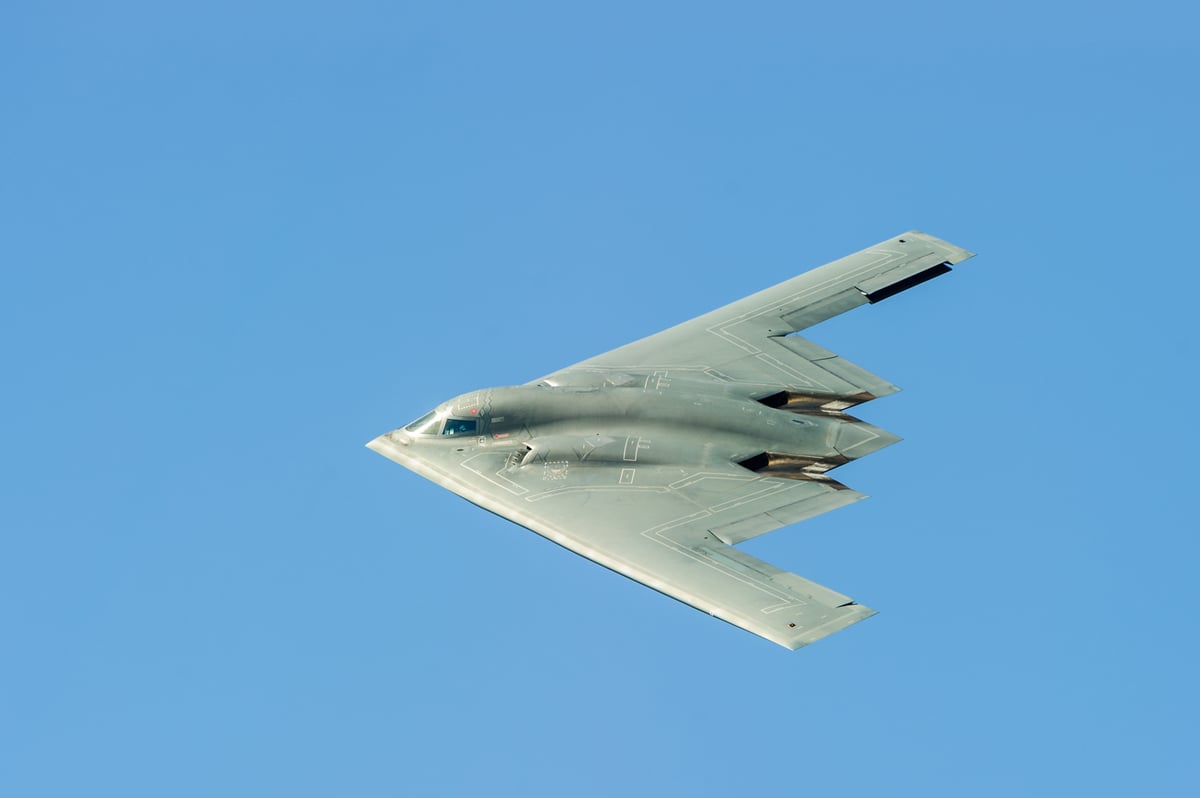
Northrop Grumman ($NOC) and Union Pacific ($UNP) are emerging as compelling dividend investment candidates, each positioned to capitalize on distinct structural tailwinds reshaping their respective industries. The defense contractor benefits from unprecedented U.S. military spending commitments, while the railroad giant stands to gain from potential operational efficiencies and market consolidation. Both companies offer investors the dual advantage of current income through dividends alongside meaningful capital appreciation potential—a combination increasingly difficult to find in today's market environment.
Key Details: Backlog Records and Strategic Positioning
Northrop Grumman's Defense Windfall
Northrop Grumman has achieved a historic milestone with its order backlog reaching $95.7 billion, providing multi-year revenue visibility and earnings stability. This unprecedented backlog reflects sustained commitment from the U.S. Department of Defense to modernize aging platforms, develop hypersonic weapons systems, and strengthen deterrence capabilities against peer competitors.
Key metrics supporting the investment thesis:
- Record $95.7 billion backlog ensures revenue predictability through 2026 and beyond
- Rising U.S. defense budgets, with bipartisan support transcending political cycles
- Diversified portfolio spanning missiles, space systems, and cybersecurity solutions
- Strong dividend yield supported by consistent cash generation from long-term contracts
The defense sector's structural growth remains durable regardless of short-term economic fluctuations. Congress has demonstrated consistent willingness to appropriate funds for military modernization, particularly given geopolitical tensions with China and Russia. Northrop Grumman's position as one of America's "Big Three" defense contractors—alongside Lockheed Martin ($LMT) and Boeing's defense division—ensures it captures a disproportionate share of defense spending.
Union Pacific's Consolidation Advantage
Union Pacific represents a more speculative but potentially rewarding dividend opportunity, contingent upon regulatory approval of a proposed merger with Norfolk Southern ($NSC). The railroad industry has historically suffered from operational inefficiency and redundant infrastructure, particularly in overlapping routes. A combined entity would eliminate duplicate capabilities and generate substantial cost synergies.
The investment rationale centers on:
- Improved logistics efficiency from consolidated operations and unified scheduling
- Network optimization eliminating competing routes and reducing operational drag
- Margin expansion from scale economies and reduced administrative overhead
- Enhanced dividend capacity as cost savings flow to the bottom line
However, this thesis carries meaningful regulatory uncertainty. The Surface Transportation Board (STB), which oversees rail mergers, has become increasingly skeptical of consolidation in recent years. The agency must weigh shipper concerns about reduced competition and service reliability against efficiency gains. A rejection or heavily conditioned approval could dampen near-term enthusiasm.
Market Context: Industry Dynamics and Competitive Landscape
Defense Sector Momentum
The defense and aerospace sector is experiencing a multi-year structural upgrade cycle. Beyond U.S. government spending, NATO expansion has driven European defense budgets to historic highs, creating additional export opportunities for American manufacturers. Northrop Grumman and peers benefit from this elevated defense spending regime, which economists project to remain elevated for the foreseeable future given geopolitical realities.
Competitor positioning:
- Lockheed Martin ($LMT): Focused on fighter aircraft and missile defense; strong order book but facing F-35 production questions
- Raytheon Technologies ($RTX): Diversified across defense and commercial aerospace; benefiting from both segments
- General Dynamics ($GD): Strong in submarines and combat systems; less exposed to commercial pressures
Northrop Grumman's emphasis on space systems and next-generation capabilities positions it advantageously for long-term trends toward space-based defense architectures.
Railroad Industry Consolidation Questions
The railroad sector has undergone significant consolidation over the past two decades, with the industry consolidating from dozens of operators to essentially five major Class I railroads: Union Pacific, Norfolk Southern, BNSF (owned by Berkshire Hathaway), CSX, and Kansas City Southern (acquired by Canadian Pacific in 2023). Each additional merger becomes increasingly scrutinized by regulators concerned about market concentration.
The Union Pacific-Norfolk Southern combination would create a transportation behemoth controlling significant portions of East-West and North-South rail corridors. Agricultural producers, manufacturers, and other shippers dependent on rail access have voiced concerns about reduced competitive pressure and potential rate increases.
Investor Implications: Dividend Sustainability and Growth Potential
For income-focused investors, Northrop Grumman presents the more conservative opportunity. The company's dividend sustainability is underwritten by U.S. government contracts—obligations that carry minimal default risk and benefit from multi-year appropriations. The $95.7 billion backlog essentially guarantees revenue and cash flow for years, enabling consistent dividend growth.
The broader market is repricing defense stocks as investors recognize defense budgets are becoming a permanent fixture of fiscal policy rather than a cyclical component. This structural shift justifies premium valuations relative to historical averages for the sector.
Union Pacific offers higher potential returns but with elevated risk. If merger approval materializes, expect:
- Immediate stock price appreciation as market prices in synergy value
- Medium-term dividend increases funded by cost savings
- Enhanced competitive position and pricing power
Conversely, merger rejection or heavily conditioned approval would likely trigger disappointment in the stock price.
Both investments align with distinct market trends: rising defense spending is cyclically resistant and geopolitically inevitable, while logistics consolidation addresses genuine operational inefficiencies—though regulatory permission remains uncertain.
Forward Outlook: Dividend Growth in an Uncertain Economy
In an economic environment where interest rates have normalized and market volatility persists, dividend-paying stocks with visible earnings growth represent rational core holdings. Northrop Grumman's combination of current income and earnings growth driven by defense modernization provides portfolio ballast alongside meaningful upside.
Union Pacific represents a higher-conviction bet on industry consolidation benefits, appealing to investors with higher risk tolerance and longer time horizons. The regulatory approval process may take 12-24 months, requiring patience from shareholders.
Both stocks offer the rare combination of sustainable dividends and capital appreciation—precisely what investors seek when yields on risk-free Treasury securities have climbed substantially. The defense contractor's thesis is more certain; the railroad's thesis is more speculative but potentially more rewarding. A balanced approach might involve overweighting Northrop Grumman while maintaining a meaningful position in Union Pacific for those comfortable with merger-related uncertainty.