
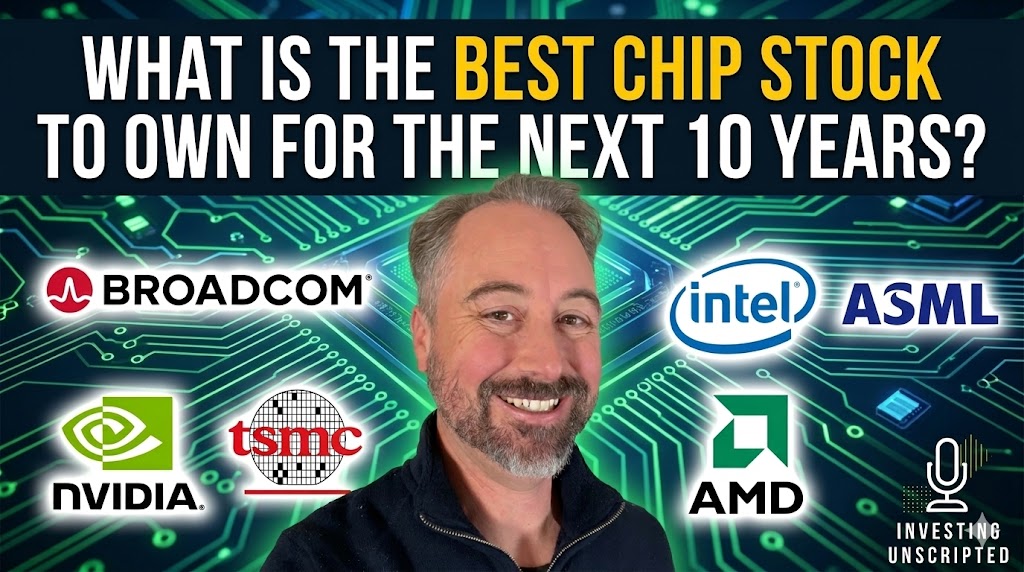
Broadcom Positioned as Top Semiconductor Play for Decade-Long Investors
Broadcom emerges as a compelling long-term semiconductor investment opportunity, according to analysis suggesting the chipmaker offers superior value compared to industry titans Nvidia and Intel. The semiconductor sector, which has delivered substantial returns over the past decade, faces a critical inflection point as artificial intelligence adoption accelerates demand for specialized processing chips. For investors with a 10-year horizon, the chip landscape presents both unprecedented opportunities and significant competitive challenges that merit careful navigation.
The Case for Broadcom in the AI Era
The bull case for Broadcom ($AVGO) rests on several foundational strengths that differentiate the company from better-known competitors. Rather than focusing exclusively on consumer-facing AI chips like its rivals, Broadcom has diversified its portfolio across infrastructure, networking, and connectivity solutions that serve the broader ecosystem of companies building AI systems.
Key strategic advantages include:
- Diversified revenue streams across networking infrastructure, telecommunications, and enterprise connectivity
- Essential position in data center architecture, where demand continues accelerating as companies build AI infrastructure
- Lower valuation multiples relative to some peers, offering potential upside for patient investors
- Strong cash generation capability to fund innovation and return capital to shareholders
The semiconductor industry has generated extraordinary wealth over the past decade, with leading companies delivering multiples of market returns. This performance reflects the sector's critical role in powering digital transformation. However, the next phase of growth—driven primarily by artificial intelligence infrastructure deployment—presents a different competitive dynamic than the previous era.
Market Context: Competition and Consolidation
The semiconductor landscape has become increasingly competitive and consolidated. Nvidia ($NVDA), despite its dominant position in AI chip design, commands premium valuations that may limit returns for new investors entering at current price levels. Intel ($INTC), once the industry standard-bearer, faces significant competitive pressure and has acknowledged the need for substantial capital investment to regain technological leadership.
Broadcom operates in a less crowded competitive segment compared to consumer and data center GPU markets. While the company competes with established players in its categories, it lacks the household-name recognition that inflates valuations for competitors pursuing more visible AI applications.
The regulatory environment also shapes industry dynamics. Semiconductor companies face ongoing scrutiny regarding supply chain concentration, particularly regarding chip manufacturing capacity and export controls. Broadcom, as a fabless design company without manufacturing operations, avoids some regulatory complications that plague integrated device manufacturers.
Industry trends supporting long-term semiconductor demand remain robust:
- AI infrastructure expansion requiring massive increases in data center capacity
- 5G and 6G rollouts demanding advanced networking and connectivity solutions
- Edge computing proliferation pushing processing power away from centralized data centers
- Automotive electrification driving semiconductor content per vehicle
- Internet of Things scaling creating billions of new connected devices requiring chips
Investor Implications: Risk and Opportunity
For equity investors evaluating semiconductor holdings, the critical question centers on valuation and growth sustainability over a decade-long investment horizon. Nvidia's extraordinary performance has created a narrative that may not be repeatable, particularly given the company's already massive scale and market capitalization.
Broadcom offers investors exposure to secular growth trends without betting exclusively on a single product category or company achieving dominance in AI. The company's diversification across multiple end markets and applications provides a hedge against concentration risk inherent in more focused semiconductor plays.
Key investment considerations include:
- Valuation comparison: How Broadcom trades relative to historical averages and peer multiples
- Capital intensity: The semiconductor industry's ongoing need for R&D investment and manufacturing capacity
- Geopolitical risks: Supply chain vulnerabilities and export restriction impacts on chip companies
- Cyclical exposure: Semiconductor demand follows broader economic cycles despite long-term growth
- Technological obsolescence: Risk that architectural innovations favor competitors' designs
Investors must also recognize that semiconductor stocks remain inherently cyclical, despite powerful secular growth tailwinds. Historical semiconductor booms have been followed by pronounced downturns, creating both buying opportunities and significant drawdowns for shareholders. A 10-year horizon permits investors to weather such cycles, but requires conviction in the underlying thesis.
The Broader Semiconductor Ecosystem
The semiconductor industry's continued prosperity hinges on several factors extending beyond individual company performance. Global demand for computing power continues accelerating, driven by AI, cloud computing, and digital services adoption. This creates a rising tide lifting the broader sector, though individual companies will experience vastly different outcomes based on execution and competitive positioning.
Broadcom's role as a key infrastructure component means the company benefits from this ecosystem expansion without bearing the singular responsibility for breakthrough innovations that market expectations increasingly impose on companies like Nvidia. This dynamic positioning could prove advantageous for long-term investors seeking exposure to semiconductor growth without maximum execution risk.
The company's financial strength, demonstrated by consistent cash generation and shareholder returns, provides ballast during cyclical downturns. This characteristic—often overlooked by growth-focused investors—becomes increasingly valuable across a 10-year investment horizon encompassing inevitable market corrections.
Looking Ahead: A Disciplined Approach
Identifying the "best" chip stock for the next decade requires honest assessment of valuation, competitive positioning, and risk tolerance. Broadcom presents a compelling alternative for investors seeking semiconductor exposure without betting the portfolio on any single company achieving continued dominance.
The semiconductor sector will undoubtedly generate substantial wealth over the next decade, as artificial intelligence infrastructure deployment accelerates and computing power becomes increasingly embedded in every aspect of modern life. However, determining which specific companies will capture the greatest share of that value remains the perpetual challenge facing equity investors. Broadcom's balanced positioning across multiple growth vectors, combined with more modest valuation levels than certain competitors, warrants serious consideration for long-term investors constructing semiconductor allocations for the 2030s and beyond.