
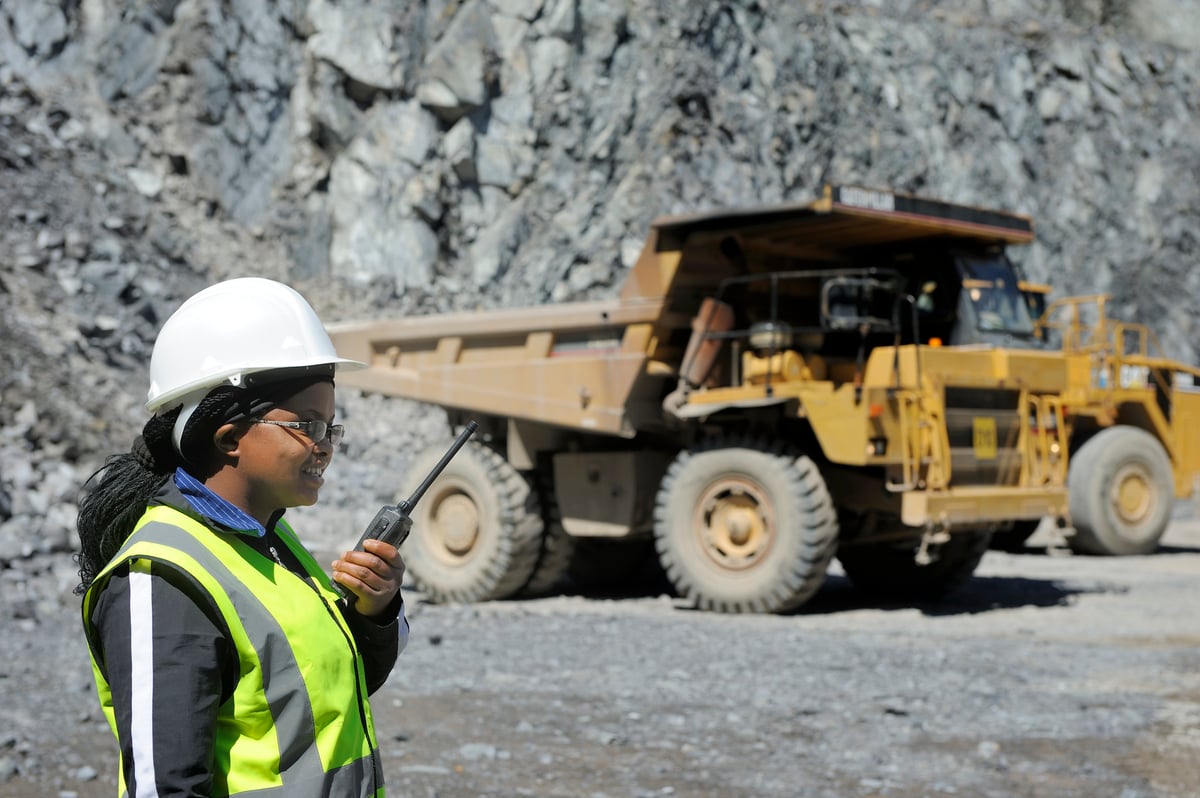
A Construction Giant's Unexpected AI Transformation
Caterpillar Inc. ($CAT), the world's largest manufacturer of construction equipment, is increasingly being viewed through the lens of artificial intelligence infrastructure rather than traditional heavy machinery. While the company's iconic yellow excavators and dozers remain central to its business, investors are recognizing a more compelling thesis: $CAT is positioned at the intersection of multiple AI-driven mega-trends that are reshaping global energy systems and manufacturing. The stock's valuation metrics—now trading above five-year averages—reflect Wall Street's growing conviction that this industrial giant has quietly become a critical beneficiary of the AI revolution.
The shift in investor perspective reveals a fundamental truth about modern technological transitions: the picks-and-shovels companies often benefit as much as the headline-grabbing tech innovators. Caterpillar's exposure to three major structural trends positions it as a compelling play for investors seeking infrastructure exposure to the AI buildout without the valuation extremes of semiconductor or cloud computing stocks.
The Multi-Faceted AI Opportunity
The bull case for $CAT rests on three distinct but interconnected demand drivers:
Data Center Construction Boom
The explosive growth in AI model training and deployment has triggered unprecedented demand for data center capacity. These facilities require extensive construction, demolition, and site preparation work—exactly where Caterpillar's equipment excels. As major cloud providers like Microsoft, Google, and Amazon race to build out computing infrastructure to support generative AI applications, construction equipment utilization rates are surging. The company's heavy machinery is essential for the physical groundwork upon which the digital AI revolution is built.
Electricity Demand Explosion
Perhaps the most compelling metric underlying the bull case: electricity demand is projected to increase 43% by 2030, with data center power consumption expected to jump an astounding 200% over the same period. This structural increase in power needs requires massive grid upgrades and new power generation capacity. Caterpillar's extensive portfolio of power generation equipment and backup power solutions positions the company as a critical infrastructure provider. Data centers cannot operate without reliable power, and backup systems are non-negotiable for mission-critical operations supporting AI services.
Reshoring and Manufacturing Renaissance
The global supply chain disruptions of recent years, combined with geopolitical tensions and the desire to reduce dependence on overseas manufacturing, have sparked a reshoring trend. The CHIPS Act and IRA (Inflation Reduction Act) are incentivizing semiconductor and battery production in North America and other allied nations. New manufacturing facilities require the same heavy equipment that data centers do: excavators for site preparation, dozers for grading, and cranes for construction. Caterpillar stands to benefit from both the reshoring movement and the equipment intensity of building new industrial capacity.
These three trends are not mutually exclusive—they're reinforcing. Each new data center requires construction equipment. Each data center requires backup power systems. Each reshored factory requires similar infrastructure investment.
Market Context: A Changing Investment Thesis
Historically, Caterpillar has been valued as a cyclical play on global economic growth and construction activity. Investors watched GDP forecasts, housing starts, and commercial real estate pipelines. The company's traditional investor base includes value investors and infrastructure-focused funds.
The emerging AI narrative represents a secular, rather than cyclical, tailwind. Unlike typical construction cycles that boom and bust with economic conditions, the infrastructure demands of AI are expected to persist and accelerate for years. This fundamental shift in the demand narrative has attracted growth-oriented investors and technology-focused funds previously indifferent to industrial equipment manufacturers.
The company operates in a favorable competitive landscape. While Komatsu and Volvo compete in construction equipment, Caterpillar's diversified portfolio—spanning power systems, engines, turbines, and diesel locomotives—provides multiple avenues to capture the AI infrastructure buildout. The company's scale and manufacturing capability create barriers to entry that smaller competitors cannot overcome.
Regulatory tailwinds also support the bull thesis. Governments worldwide are prioritizing grid modernization and data center development as strategic priorities. Permitting and approval timelines, while still challenging, are accelerating for infrastructure projects deemed critical to national competitiveness in the AI era.
Investor Implications: Valuation and Risk Considerations
The most important caveat for investors: $CAT's valuation metrics have moved above five-year averages, indicating that much of this opportunity is already priced into the stock. The market has recognized the AI infrastructure thesis. This doesn't invalidate the investment case, but it does mean investors are paying premium valuations for premium growth assumptions.
Key considerations for portfolio decisions:
-
Execution Risk: Caterpillar must successfully scale production to meet anticipated demand. Supply chain constraints, labor availability, and manufacturing capacity could all impact the company's ability to capitalize on these trends.
-
Cyclical Exposure Remains: While the AI infrastructure opportunity is structurally compelling, $CAT still carries traditional construction cycle risk. A significant economic downturn could dampen equipment demand even if data center construction remains strong.
-
Power Systems Scaling: The backup power and grid infrastructure opportunity requires different expertise than construction equipment. Caterpillar's ability to execute in these adjacent markets will be crucial to realizing the full bull case.
-
Capital Allocation: With a massive installed base and strong cash generation, how management deploys capital—whether through dividends, buybacks, or R&D investment in power systems—will influence long-term returns.
For investors convinced of the AI infrastructure secular trend, $CAT offers exposure with lower multiple-expansion risk than pure-play AI stocks, but with higher valuation than traditional industrial comparables. The stock is suitable for growth-oriented investors with conviction in sustained AI infrastructure spending, less appealing for value investors seeking deep discounts.
The Invisible Hand Behind the AI Revolution
Caterpillar's transformation from a cyclical construction play to a secular AI infrastructure beneficiary reflects a deeper truth about technological revolutions: the most profitable participants are often unsexy, unglamorous manufacturers that enable the headlines. While $NVDA, $MSFT, and other AI-focused stocks dominate financial media, $CAT quietly operates in the critical layers beneath the visible AI economy.
The company's positioning benefits from a 43% projected increase in electricity demand by 2030, with data center power consumption potentially tripling. These are not speculative projections—they're engineering requirements driven by physical infrastructure constraints. Every gigawatt of new AI computing capacity requires copper wire, transformers, generators, and the equipment to install them.
Whether Caterpillar deserves its above-average valuation ultimately hinges on execution and demand realization. But the macro case for sustained, secular demand tailwinds appears durable, making this industrial giant a credible, if unconventional, way to position a portfolio for the AI infrastructure era.