
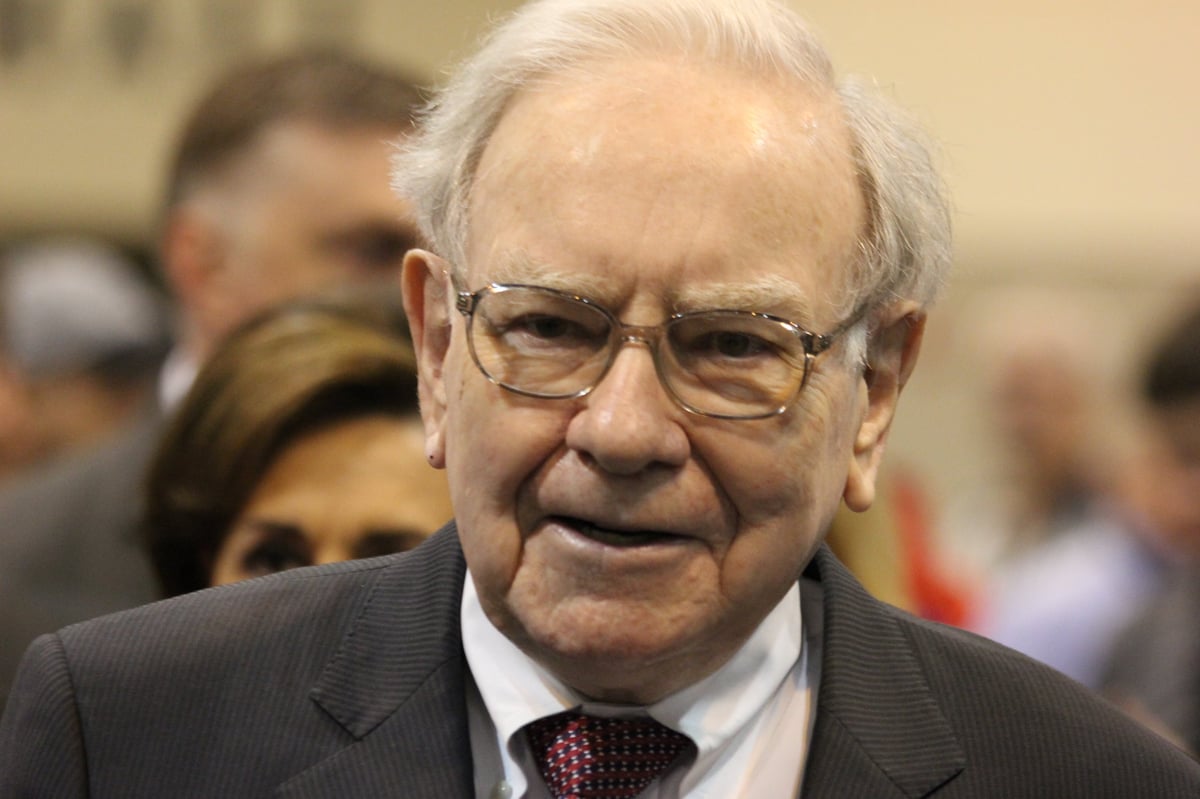
Berkshire Hathaway's Mixed Portfolio Performance
Warren Buffett's investment holdings reveal a clear dichotomy between thriving technology and financial services businesses and struggling legacy consumer goods companies. Among Berkshire Hathaway's largest positions, Apple ($AAPL) and American Express ($AXP) stand out as compelling long-term investments worthy of investor attention, while Kraft Heinz ($KHC) represents a cautionary tale of value trap investing that even the world's most celebrated investor cannot fully rescue.
Key Details: The Winners and the Loser
The case for Apple rests on fundamentals that extend far beyond its status as a consumer electronics manufacturer. The company has evolved into a dominant platform player with extraordinary ecosystem lock-in, recurring services revenue streams, and consistent capital returns to shareholders through buybacks and dividends. Apple's financial performance demonstrates resilience across economic cycles, with:
- Strong recurring revenue from Services segment
- Premium pricing power in global markets
- Consistent free cash flow generation
- Robust margins supporting shareholder returns
American Express similarly exhibits structural competitive advantages rooted in its premium positioning within the payments ecosystem. The company's closed-loop model—where Amex both issues cards and operates the payment network—creates superior economics compared to traditional credit card processors. Key strengths include:
- High-spending customer base with premium demographics
- Proprietary data advantages in transaction analytics
- Durable customer relationships with strong retention
- Significant float benefits from advance customer payments
Conversely, Kraft Heinz presents the inverse scenario. Despite aggressive cost-cutting initiatives and recent investments in research and development aimed at product innovation, the company faces persistent revenue headwinds reflecting structural challenges in the packaged food industry. The business has struggled with:
- Consistent revenue decline across major product categories
- Inability to offset portfolio weakness through operational efficiency alone
- Changing consumer preferences toward fresh, minimally-processed foods
- Loss of market share to both premium and private-label competitors
Market Context: Industry Trends and Competitive Positioning
The divergence between these investments reflects broader trends reshaping capital markets. Technology and financial services sectors have benefited from secular tailwinds including digital transformation, rising consumer spending, and the shift toward services-based economics. Apple exemplifies how a company can sustain premium valuations by maintaining technological leadership while building moats through ecosystem integration and brand loyalty.
American Express, meanwhile, operates in a payments landscape where consolidation and network effects create winner-take-most dynamics. The company's position as an issuer, processor, and network simultaneously is increasingly rare and valuable in an era where data and customer relationships drive profitability.
The packaged food sector, by contrast, faces structural headwinds. Consumer preferences have shifted decisively away from the ultra-processed convenience products that built Kraft Heinz's historic empire. The company's 2019 accounting scandal and subsequent $15 billion write-down underscored how aggressive cost-cutting and financial engineering cannot substitute for relevant, differentiated products. While management has attempted to pivot toward healthier options and innovation, execution has lagged competitors.
Investor Implications: Portfolio Construction in a Bifurcated Market
For investors seeking Berkshire Hathaway exposure, the portfolio composition matters significantly. Buffett's continued confidence in Apple—now Berkshire's largest holding—reflects conviction in the company's ability to compound shareholder value for decades. The investment thesis remains intact: as the world's most valuable company, Apple continues generating cash flows that exceed capital requirements, enabling aggressive shareholder returns while maintaining fortress-like balance sheet strength.
American Express offers a different but equally compelling narrative around pricing power and cash generation. In an environment where interest rates remain elevated, the company's ability to earn substantial spreads on lending while charging premium annual fees provides cushion against economic slowdown. The premium customer base exhibits remarkable resilience during recessions, supporting the thesis that recessions are buying opportunities rather than reasons to exit.
Kraft Heinz illustrates the risk of overpaying for mature, cash-generative businesses without evaluating underlying product relevance. The company trades at depressed valuations for good reason: investors rationally discount businesses with deteriorating competitive positions. Buffett's willingness to absorb substantial losses on Kraft Heinz—perhaps his most significant investment mistake in recent years—demonstrates that even great investors can misjudge secular industry trends.
The investment implications extend beyond Berkshire's portfolio. The three stocks represent different risk-return profiles:
- Apple offers growth at scale with unmatched competitive advantages
- American Express provides steady cash generation with pricing power
- Kraft Heinz represents a value trap where numerical cheapness masks fundamental deterioration
Forward-Looking Perspective
As Berkshire Hathaway evolves from the conglomerate consolidator of decades past toward a more focused portfolio of high-quality assets, the portfolio composition provides instructive signals for investors. Buffett's continued accumulation of Apple and maintained conviction in American Express suggest these businesses can earn superior returns on capital for extended periods. Conversely, his unwillingness to significantly increase Kraft Heinz exposure—despite massive write-downs creating apparent value—suggests resignation regarding the business's structural challenges.
Investors evaluating these stocks should focus on sustainable competitive advantages, management quality, and the likelihood of long-term value creation rather than current valuation levels alone. The Buffett portfolio, viewed holistically, endorses quality businesses in growing categories over aging businesses in declining ones—a timeless principle that transcends market cycles.