
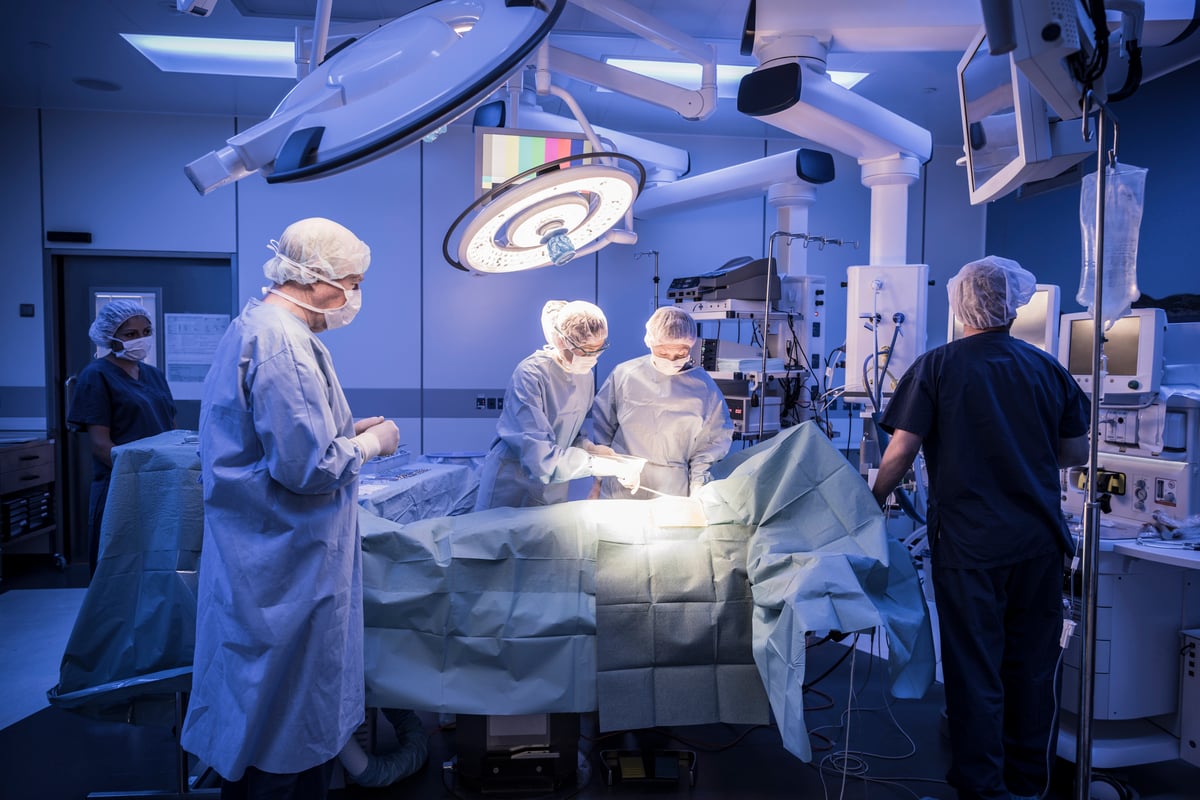
Surgical Robots and Glucose Monitors Positioned for Decade-Long Growth Despite Competition
Intuitive Surgical ($ISRG) and DexCom ($DXCM) are emerging as compelling long-term holdings despite near-term challenges facing both the medical device sector and the broader economy. Despite intensifying competition and recent market volatility, these two companies possess structural advantages that position them to capitalize on powerful demographic and clinical trends over the next decade.
Both companies operate in the rapidly expanding medical device space, where technological innovation, aging populations, and chronic disease prevalence create enduring tailwinds. Yet each faces distinct competitive pressures and market opportunities that will ultimately determine whether they can sustain their growth trajectories through 2035 and beyond.
Intuitive Surgical's Moat Under Pressure, Yet Resilient
Intuitive Surgical, the dominant player in robotic-assisted surgery, has long held a fortress-like competitive position in its market. The company's da Vinci surgical system has become the gold standard for minimally invasive procedures, with widespread adoption across hospitals globally. The installed base of systems continues to expand, and the procedure volumes on these machines remain sticky, creating a powerful recurring revenue stream through instrument and service sales.
However, the competitive landscape is shifting. Medtronic's Hugo system represents the first serious institutional threat to Intuitive's hegemony in robotic surgery. Hugo's entry into the market has forced Intuitive to defend its turf more aggressively, though the company's entrenched position—stemming from deep relationships with hospital systems, surgeon training ecosibility, and a proven track record—remains formidable.
The fundamental driver of long-term growth for Intuitive Surgical remains compelling: the aging global population. Procedures that benefit from robotic assistance—including prostatectomies, hysterectomies, and complex abdominal surgeries—are performed far more frequently in elderly populations. As developed nations experience significant demographic shifts toward older age cohorts, procedure volumes should naturally expand, lifting the installed base and procedure counts simultaneously.
- Key growth drivers: Aging populations in developed markets; expansion into emerging markets; new procedure applications
- Competitive challenge: Medtronic's Hugo system gaining traction
- Resilience factor: Entrenched relationships, training ecosystem, recurring revenue model
DexCom's Massive Untapped Market Opportunity
DexCom, a leader in continuous glucose monitoring (CGM) technology, faces a distinctly different opportunity set than Intuitive Surgical. The company's core diabetes market remains substantially underpenetrated, particularly in the United States where millions of patients—many uninsured or underinsured—lack access to CGM technology despite its clinical benefits.
This represents a massive addressable market expansion opportunity. Current CGM adoption among insulin-using diabetics remains below 50%, meaning the installed base can easily double or triple as reimbursement expands, pricing declines, and awareness increases. For patients not yet on insulin, CGM adoption is even more nascent, creating a multi-year runway of organic growth from deepening market penetration alone.
Beyond diabetes, DexCom is pursuing an even larger opportunity: expansion into non-diabetic populations. The company's Stelo product, designed for people without diabetes who wish to optimize their metabolic health through glucose monitoring, opens an entirely new addressable market. This "quantified self" and metabolic health movement represents a potentially massive consumer opportunity, with hundreds of millions of people globally interested in optimizing their health through continuous data.
The combination of:
- Deepening penetration in core insulin-dependent diabetes population
- Expanding into pre-diabetic and metabolically interested consumers via Stelo and similar products
- Geographic expansion into emerging markets with growing diabetes prevalence
- Potential reimbursement expansion as healthcare systems recognize CGM's cost-effectiveness in preventing complications
suggests DexCom could maintain double-digit percentage growth rates for many years.
Market Context: Medical Devices in a Shifting Landscape
Both companies operate within a medical device sector experiencing significant structural change. Healthcare systems globally face pressure to contain costs while simultaneously demanding improved outcomes, creating a paradox that technology leaders can exploit.
Robotic-assisted surgery and continuous glucose monitoring both represent technologies that ultimately reduce healthcare system costs by preventing complications, reducing hospital stays, and enabling more efficient care delivery. As reimbursement models evolve from fee-for-service toward value-based arrangements, these outcomes-focused technologies should command premium pricing or, conversely, expand significantly as cost-effectiveness is demonstrated.
The competitive landscape differs meaningfully between the two companies:
Intuitive Surgical faces:
- Direct competition from Medtronic in robotic surgery
- Potential competition from emerging Chinese robotics companies in lower-cost segments
- Regulatory scrutiny around surgical device safety and pricing
DexCom faces:
- Competition from Abbott's FreeStyle Libre and other CGM manufacturers
- Pricing pressure from both competitors and payers
- Regulatory questions around non-medical use cases (Stelo market)
Yet both companies possess advantages that make direct displacement unlikely: Intuitive has years of installed base advantage and surgeon preference, while DexCom leads in algorithm accuracy and user experience.
Investor Implications: Why Hold Through 2035
For long-term investors, the investment thesis centers on three core arguments:
First, demographic inevitability. Aging is not a cyclical phenomenon but a multi-decade structural trend affecting developed and increasingly developing markets. Procedures benefiting from robotic assistance will naturally increase, and chronic disease prevalence will expand the diabetes population exponentially.
Second, market expansion potential. Both companies operate in markets substantially below saturation. Intuitive's installed base and procedure volumes can expand for decades. DexCom's addressable market could expand 5-10x if non-diabetic glucose monitoring achieves even modest penetration.
Third, competitive moats. Despite new competition, both companies possess defensible competitive positions rooted in superior technology, entrenched customer relationships, or network effects that will prove difficult to overcome. Intuitive benefits from the "ecosystem lock-in" of surgeon training and hospital infrastructure; DexCom benefits from superior product performance and first-mover advantages in new segments.
The near-term headwinds affecting both stocks—market volatility, rising interest rates, competitive pressure—are temporary by comparison to these decade-long structural trends.
Looking Ahead: A Decade of Opportunity
As we enter a period of demographic transition and chronic disease expansion, medical device companies positioned to address these trends should thrive. Intuitive Surgical and DexCom represent two different approaches to capturing this opportunity: one through the penetration of a proven technology, the other through market expansion and new application development.
While near-term execution risk, competitive pressure, and macro headwinds will continue to create volatility, the decade-long structural trends supporting both companies remain intact. For patient, long-term investors who can tolerate volatility, both companies offer compelling risk-reward profiles that reward a multi-year holding period.