
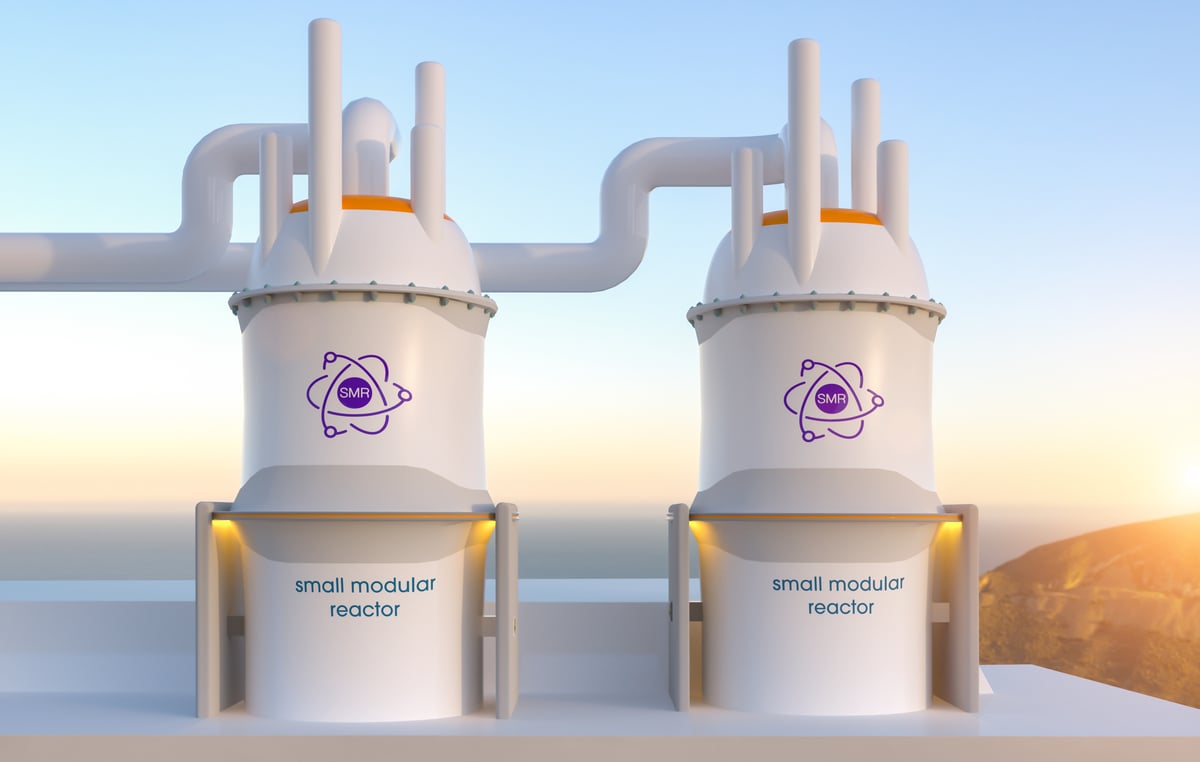
Oklo vs. NuScale: Which SMR Player Wins in the AI Power Race?
As artificial intelligence continues to reshape global energy demand, two small modular reactor (SMR) companies are emerging as potential beneficiaries of the explosive growth in data center construction. Oklo and NuScale Power represent competing visions for how next-generation nuclear technology can address the surging electricity requirements of AI infrastructure—but their positioning, reactor designs, and valuations tell vastly different stories about which company may ultimately prove more valuable to investors.
The comparison reveals a stark contrast: Oklo's $9.8 billion market valuation dwarfs NuScale Power's $3.9 billion market cap, yet analysts argue that Oklo's technological approach aligns more closely with the specific power requirements of hyperscale data center operators racing to build out AI computing capacity. This valuation premium reflects market expectations about Oklo's near-term commercialization prospects and its positioning in what could become a trillion-dollar market.
The Nuclear Technology Divide
The fundamental difference between these two companies lies in their reactor specifications and target markets. Oklo's modular reactors are designed to produce between 15 and 75 megawatts of power, making them exceptionally well-suited for distributed deployment across multiple AI data center facilities. This scalability is crucial in an environment where major technology companies are constructing smaller, specialized computing facilities rather than consolidating all operations into massive centralized data centers.
NuScale Power, by contrast, is developing larger SMR units designed for a different market segment. While NuScale's reactors offer greater output per unit, they lack the granular modularity that makes Oklo's approach particularly attractive for AI infrastructure deployment. This architectural difference reflects divergent strategic bets about how the SMR market will ultimately structure itself.
Key technological and commercial considerations include:
- Oklo's 15-75 MW range provides flexibility for distributed data center power needs across geographic regions
- NuScale's larger design targets utility-scale power generation and industrial applications
- Deployment timeline: Oklo's pathway to commercialization may accelerate given the urgency of AI infrastructure buildout
- Regulatory approval status: Both companies face the ongoing challenge of navigating nuclear regulatory frameworks, though Oklo's smaller footprint may streamline approval processes
- Manufacturing scalability: Oklo's modular design philosophy enables faster production ramp-up compared to larger reactor construction
Market Context: The AI Energy Revolution
The energy dynamics powering artificial intelligence have become one of the most critical infrastructure narratives of the decade. Major technology companies—Amazon, Google, Microsoft, and Meta—are aggressively acquiring power supplies to meet the insatiable electricity demands of training and running large language models and other AI systems. Traditional renewable energy sources, while critical for long-term sustainability goals, cannot alone satisfy the baseload power requirements that AI infrastructure demands.
This reality has triggered a dramatic reassessment of nuclear energy's role in the global energy transition. Unlike solar and wind resources that depend on weather conditions, nuclear power provides consistent, predictable baseload electricity—exactly what data centers require for 24/7 operations. The emergence of SMRs as a viable technology has accelerated this reconsideration by offering a pathway to nuclear power that doesn't require massive upfront capital expenditures or the decade-long construction timelines associated with conventional nuclear plants.
The competitive landscape extends beyond just Oklo and NuScale. Other SMR developers and conventional nuclear operators are positioning themselves to capture this opportunity. However, Oklo's $9.8 billion valuation versus NuScale's $3.9 billion market cap suggests that investors are currently favoring Oklo's business model and commercialization timeline, despite both companies operating in a nascent industry with significant regulatory and operational uncertainties.
Industry momentum indicators point to accelerating demand:
- Data center power consumption growth: AI workloads are driving double-digit year-over-year increases in electricity demand
- Corporate power purchase agreements: Major tech companies are signing long-term contracts for nuclear-supplied electricity
- Regulatory tailwinds: Government support for advanced nuclear technology has increased substantially
- Supply chain development: The ecosystem supporting SMR deployment is maturing rapidly
Investor Implications and Valuation Considerations
The valuation disparity between these companies raises important questions for investors evaluating exposure to the nuclear power sector. Oklo's premium valuation reflects market confidence in several factors: the perceived superiority of its distributed reactor design for AI applications, the pace at which it may achieve commercial operation, and the total addressable market it can capture in the AI infrastructure buildout.
However, this premium valuation also implies higher expectations and greater execution risk. Oklo must deliver on aggressive timelines and secure commitments from data center operators to justify its current market cap. Any delays in regulatory approval, cost overruns in manufacturing, or loss of major customer commitments could trigger significant shareholder losses.
Conversely, NuScale Power's lower valuation may represent an opportunity for investors with greater risk tolerance. If NuScale successfully pivots toward AI data center applications or if the market comes to prefer larger, more consolidated reactor designs, the company's stock could experience substantial appreciation. The $3.9 billion valuation leaves more room for positive surprises.
Key investment considerations:
- Execution risk: Both companies must successfully commercialize unproven reactor designs at scale
- Regulatory risk: Nuclear power generation faces perpetual regulatory scrutiny and approval timelines remain uncertain
- Customer concentration: Early revenue may depend on a small number of hyperscale data center operators
- Capital requirements: Both companies will likely require substantial additional funding to finance construction and deployment
- Technology obsolescence: As AI efficiency improves and power requirements potentially decline, demand assumptions could shift
- Commodity exposure: Power prices and uranium costs will significantly impact operating economics
For equity investors, the choice between these positions depends on conviction about which technological approach will dominate the AI infrastructure market. Growth-oriented investors betting on Oklo are essentially wagering that distributed, smaller reactors represent the future of data center power. Value-oriented investors considering NuScale are positioning for a potential revaluation if the market reassesses the company's technology or market opportunity.
Looking Forward: The Race for Market Dominance
As the AI industry continues its exponential expansion, the commercial stakes for SMR providers have never been higher. Both Oklo and NuScale Power are racing against time to achieve commercialization, secure customer commitments, and establish themselves as the preferred supplier of nuclear power for next-generation data center infrastructure.
The current valuation gap suggests that markets have formed a preliminary judgment about which company's approach aligns better with near-term commercial opportunities. However, the SMR market is sufficiently nascent and the AI infrastructure buildout is sufficiently massive that there may ultimately be room for multiple successful providers. The ultimate winners will be those companies that can navigate regulatory frameworks, maintain cost discipline, and secure binding commitments from the world's largest technology companies.
Investors monitoring this sector should track several key developments: regulatory approval timelines, signed power purchase agreements with data center operators, manufacturing capacity buildout progress, and any strategic partnerships or financing announcements that signal momentum in commercialization efforts. The intersection of AI infrastructure demand and advanced nuclear technology represents one of the most consequential capital allocation opportunities in the energy sector—and the competition between Oklo and NuScale will likely define the landscape for years to come.