
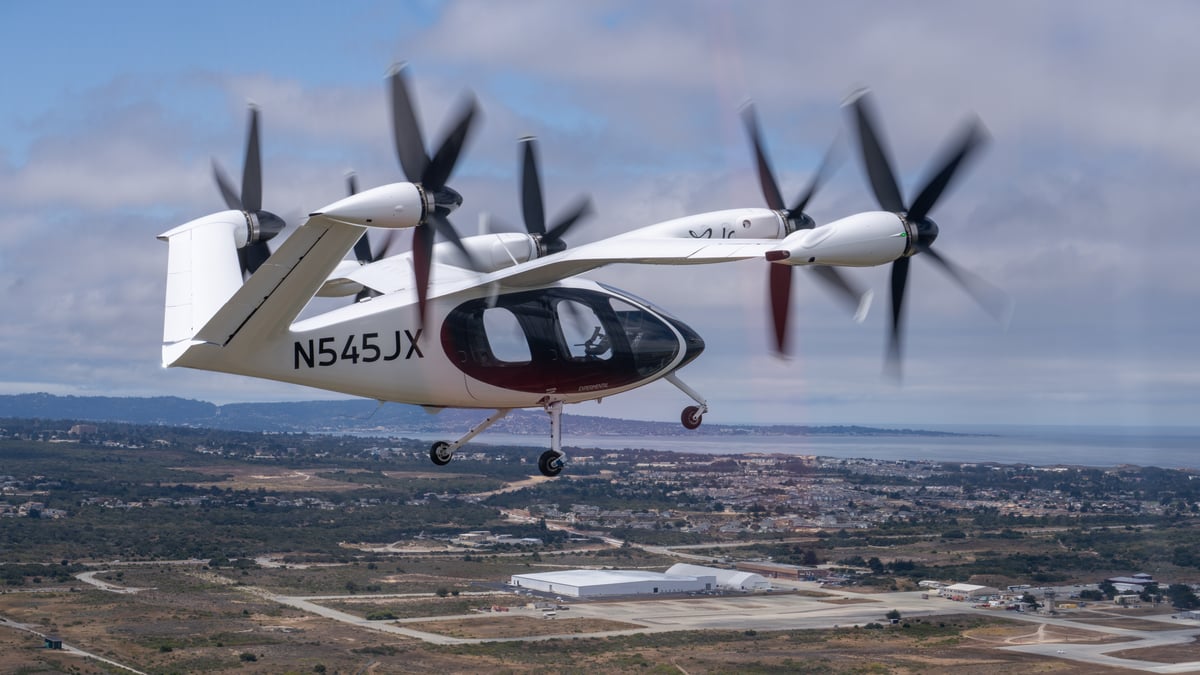
Two major players are staking competing claims in the emerging electric vertical takeoff and landing (eVTOL) aircraft sector, each pursuing distinct technological and commercialization strategies. Joby Aviation is developing piloted eVTOL aircraft while simultaneously building autonomous flight capabilities, whereas Boeing's Wisk subsidiary is concentrating exclusively on fully autonomous operations. This divergence reflects fundamental differences in how each company views the near and long-term commercialization of urban air mobility services.
Joby's dual-path approach is supported by substantial capital and strategic partnerships. The company closed a $1.2 billion funding round and has secured agreements with major transportation players including Uber and Delta Air Lines. These partnerships signal confidence in Joby's near-term commercialization prospects and provide distribution channels for eventual service deployment. By developing piloted aircraft first while advancing autonomous technology in parallel, Joby positions itself to capture market opportunities across different regulatory and operational phases.
Boeing's Wisk subsidiary faces different competitive dynamics, operating under the aerospace giant's broader financial constraints while betting entirely on autonomous flight. Analysts view Joby's hedged development strategy and capital position as providing a potential advantage in the race to establish the first commercially viable eVTOL transportation-as-a-service operations, positioning the company as a more direct play on the emerging urban air mobility market compared to its better-capitalized but more narrowly focused competitor.