
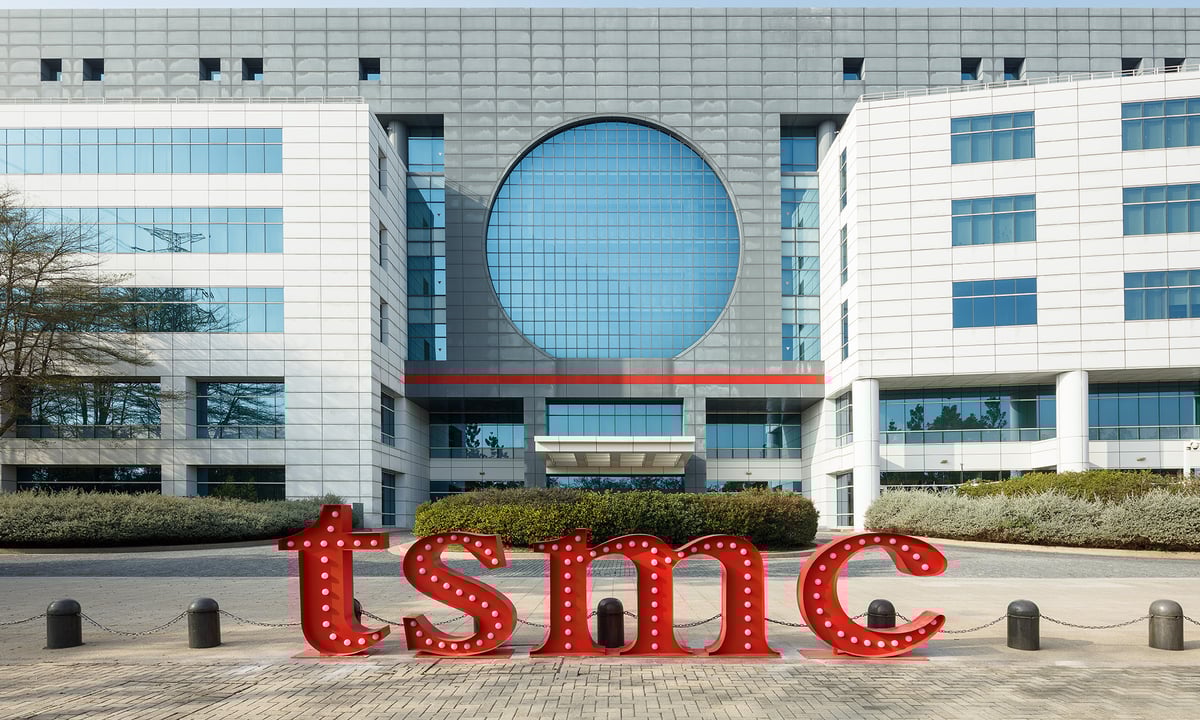
Tech Giants' $720B AI Spending Spree Signals Windfall for TSMC
The world's largest technology companies are projected to invest a staggering $720 billion in artificial intelligence infrastructure throughout 2026, underscoring the relentless capital push to develop and deploy next-generation AI systems. While the headline beneficiaries might appear to be chip designers like Nvidia ($NVDA) and AMD ($AMD), an often-overlooked player stands positioned to capture value across virtually every dollar spent: Taiwan Semiconductor Manufacturing Company ($TSM), the world's leading contract chipmaker whose manufacturing prowess underpins the entire AI infrastructure buildout.
This massive allocation of capital by hyperscalers—the mega-cap cloud computing and technology giants including Amazon, Microsoft, Google, and Meta—reflects an unprecedented commitment to maintaining competitive advantage in artificial intelligence. The scale of these investments reveals just how critical AI infrastructure has become to corporate strategy, with companies willing to deploy unprecedented sums to secure computing capacity and technological leadership. For investors seeking exposure to this AI revolution, the opportunity may lie not in the most obvious names, but in the foundational infrastructure that makes it all possible.
The Infrastructure Spending Explosion
The $720 billion projected AI capex for 2026 represents a continuation and acceleration of trends already visible across the industry. Hyperscalers have been steadily increasing their infrastructure spending as they compete to develop proprietary large language models, train neural networks, and build the data centers necessary to deliver AI services at scale. This capital intensity is unlikely to diminish—if anything, it will intensify as companies pursue increasingly sophisticated AI capabilities.
Key drivers of this spending surge include:
- GPU demand acceleration: Advanced GPUs from Nvidia and AMD remain critical to AI workloads, driving semiconductor purchasing cycles
- Data center expansion: Physical infrastructure buildout requires servers, networking equipment, and facilities investments
- Chip manufacturing capacity: Producing the massive volumes of semiconductors needed requires sustained contract manufacturing
- Competitive dynamics: Companies fear falling behind rivals in AI capability, creating pressure to spend aggressively
For context, these figures eclipse historical capex patterns by significant margins. Traditional data center investment cycles look modest compared to the AI infrastructure race, signaling a structural shift in how technology companies allocate capital.
Why TSMC Becomes the Kingmaker
While Nvidia and AMD capture investor attention as the designers of cutting-edge AI processors, the actual manufacturing of these chips depends almost entirely on Taiwan Semiconductor Manufacturing Company. TSMC operates the vast majority of leading-edge semiconductor fabrication plants globally, controlling roughly 50% of the world's foundry market and significantly higher percentages in advanced nodes critical for AI chips.
This position is nearly unassailable. The company manufactures:
- Nvidia's H100, H200, and next-generation GB200 GPUs—the dominant processors for AI training and inference
- AMD's MI300 series accelerators—Intel's alternative to Nvidia's offerings
- Custom AI chips for hyperscalers including Amazon (Trainium, Inferentia), Google (TPU), and Microsoft
- Supporting infrastructure chips for data center deployments
What makes TSMC unique is that every major player in the AI chip market—competitors and all—must rely on its manufacturing capabilities. As hyperscalers collectively spend $720 billion on AI infrastructure, TSMC captures value from nearly all of it through manufacturing fees, equipment sales to its supply chain, and sustained utilization of its fabrication plants. This creates a "picks and shovels" dynamic where the manufacturer profits regardless of which competitors win in the AI arms race.
Market Context and Valuation Opportunity
Despite TSMC's critical role in the AI infrastructure buildout, the stock trades at a forward price-to-earnings ratio of 23.6—notably below its historical peak valuations. This relative cheapness is striking given the company's guaranteed revenue visibility from hyperscaler capex commitments and the structural tailwinds driving AI infrastructure spending.
The semiconductor industry backdrop supports sustained demand:
- Supply constraints persist: Despite industry discussions of oversupply, leading-edge manufacturing capacity remains constrained
- Process node advancement: TSMC continues advancing to smaller nanometer nodes (3nm, 2nm) where margins are highest
- Geopolitical importance: U.S. and allied governments view TSMC as critical infrastructure, supporting policy frameworks favorable to the company
- Competitive moat: Replacing TSMC's manufacturing capability would require years and tens of billions in investment
Compare TSMC's valuation to historical precedent: during previous technology infrastructure buildouts, foundry companies commanded significant premiums. The current valuation appears to reflect either investor skepticism about AI's durability or underappreciation of TSMC's unique positioning.
Investor Implications and Forward Outlook
For equity investors, the $720 billion AI infrastructure spending projection carries several implications:
Direct beneficiaries face competition: While Nvidia and AMD will see revenue growth, both companies compete against each other and face displacement risk from custom chips. Nvidia's dominance is not assured indefinitely—Google, Amazon, and Meta are investing heavily in proprietary alternatives.
TSMC's moat is durable: The company cannot be easily displaced. Custom chip designs still require TSMC manufacturing. Even if hyperscalers develop superior custom architectures, they still depend on TSMC to produce them. This insulates the company from commoditization risk that threatens pure chip designers.
Capital intensity creates ongoing revenue: The projected $720 billion spending in 2026 will likely extend into subsequent years as AI systems require continuous refresh cycles, model retraining, and infrastructure upgrades. TSMC benefits from this recurring capex pattern.
Valuation offers margin of safety: At a forward P/E of 23.6, TSMC offers more attractive risk-reward than historically expensive chip stocks. Should AI infrastructure spending accelerate beyond projections, or should execution remain strong, significant upside exists.
Conclusion
The artificial intelligence revolution is driving unprecedented capital investment in technology infrastructure, with $720 billion projected for 2026 alone. While chip designers receive headline attention, Taiwan Semiconductor Manufacturing Company stands positioned as the fundamental beneficiary—the indispensable manufacturer that profits from every dollar spent on AI infrastructure regardless of which companies or design philosophies ultimately prevail. With a forward P/E of 23.6 sitting below historical peaks, the stock offers investors exposure to sustained structural tailwinds at a reasonable valuation. As hyperscalers continue their aggressive capex expansion, TSMC remains the ultimate infrastructure play in the AI economy.