
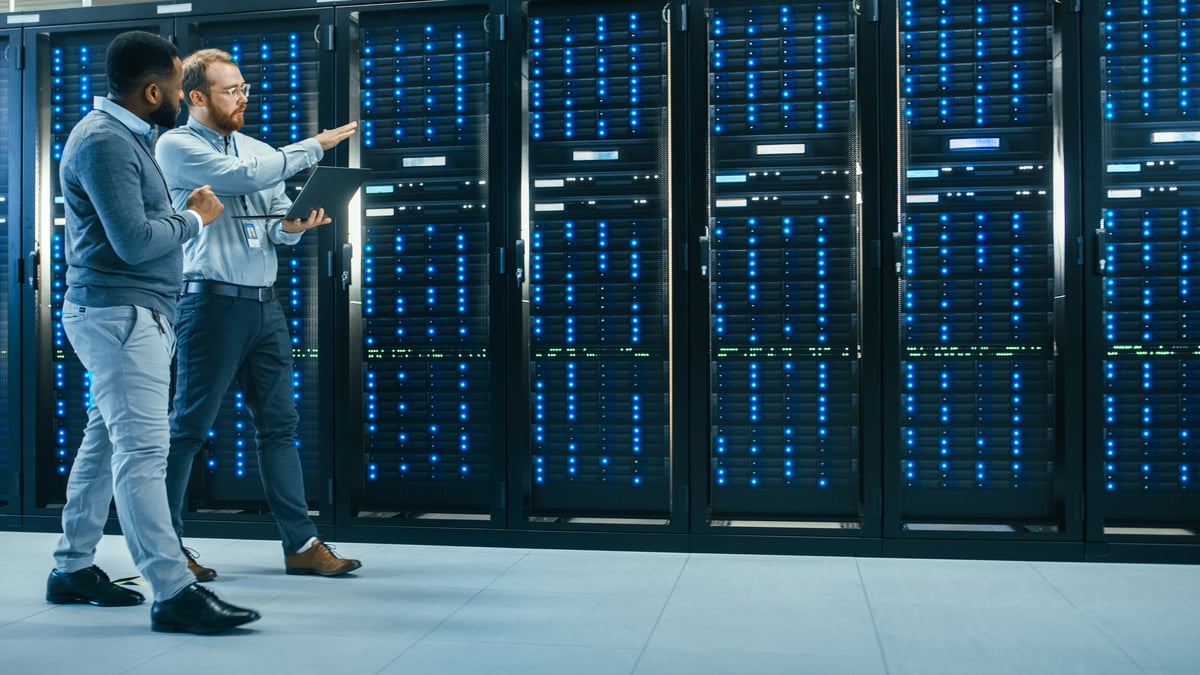
Nebius Group, a specialized neocloud provider focused on artificial intelligence infrastructure, has captured investor enthusiasm with a 55% stock surge year-to-date, riding the wave of insatiable demand for GPU computing capacity. The company's trajectory is underpinned by exceptional growth projections and a landmark partnership with Meta, raising critical questions about whether current valuations reflect sustainable fundamentals or irrational exuberance in the overheated AI infrastructure sector.
The rally reflects broader market enthusiasm for companies positioned at the intersection of artificial intelligence and cloud computing infrastructure. As enterprises and large technology firms race to develop generative AI applications, the scarcity of GPU capacity has created a competitive advantage for providers like Nebius that own and operate their own data centers. This vertical integration model differentiates the company from traditional cloud providers and positions it as a critical partner in the infrastructure layer of the AI revolution.
Revenue Projections Signal Explosive Growth
Nebius is projecting dramatic revenue expansion from approximately $1.25 billion in annualized 2025 revenue to between $7 billion and $9 billion in 2026—representing potential growth of 460% to 620% over a single year. This extraordinary projection is anchored by a transformative $27 billion deal with Meta, the parent company of Facebook and Instagram, which underscores the magnitude of computing capacity requirements for training and operating advanced AI models.
Key financial metrics supporting the investment thesis include:
- $3 billion in cash reserves providing significant operational flexibility and investment capacity
- Owned data center infrastructure reducing dependency on third-party landlords and enhancing margin profiles
- GPU supply scarcity creating favorable pricing dynamics for capacity providers
- Multi-year contracted revenue from major technology clients providing visibility into future performance
The Meta partnership represents a major validation of Nebius's technical capabilities and capacity. Meta's decision to source such substantial computing power from Nebius rather than building exclusively internal capacity demonstrates either supply constraints in the broader market or confidence in Nebius's ability to deliver specialized AI infrastructure at scale.
Market Context: Competition and Industry Tailwinds
The GPU infrastructure market remains extraordinarily constrained, with demand vastly outpacing supply from leading chipmakers including Nvidia ($NVDA), AMD ($AMD), and Intel ($INTC). This shortage has created a temporary advantage for companies controlling access to the most advanced processors, including Nebius and direct competitors like CoreWeave, Lambda Labs, and traditional hyperscalers such as Amazon Web Services ($AMZN), Microsoft Azure ($MSFT), and Google Cloud (parent Alphabet, $GOOGL).
Nebius's differentiation lies in its focus specifically on AI workloads combined with owned infrastructure. Unlike Amazon, Microsoft, and Google—which offer comprehensive cloud services across compute, storage, and analytics—Nebius has concentrated expertise and capital deployment in the precise segment driving extraordinary growth: GPU-intensive artificial intelligence operations.
However, competitive threats remain substantial. Hyperscale cloud providers possess:
- Vastly greater capital resources for infrastructure expansion
- Established customer relationships and cross-selling opportunities
- Advanced networking and software optimization capabilities
- Global geographic reach and redundancy
As GPU shortages gradually ease over the next 12-24 months, Nebius faces the structural challenge that larger cloud providers will increasingly capture GPU workloads, potentially compressing pricing power and growth rates.
Valuation Concerns Amid Explosive Projections
The 55% year-to-date rally in Nebius stock warrants careful scrutiny regarding whether valuations have become disconnected from fundamental economics. The company's projected growth—while extraordinary in absolute terms—assumes sustained GPU capacity scarcity and uninterrupted execution on multi-billion-dollar customer contracts.
Key valuation considerations include:
- Execution risk on reaching $7-9 billion revenue: Supply chain disruptions, customer delays, or competitive pressure could compress growth trajectories
- Margin profile uncertainty: Current projections likely reflect premium pricing in a supply-constrained environment; as supply normalizes, gross margins may face compression
- Customer concentration risk: Heavy reliance on Meta and other large technology customers creates vulnerability to customer-specific challenges or changing capital allocation priorities
- Technology obsolescence: The rapid evolution of AI chip architectures could render data center investments prematurely obsolete
- Regulatory exposure: Data center operations face potential scrutiny regarding energy consumption, environmental impact, and government regulation of critical AI infrastructure
The company's $3 billion cash position provides a safety margin and investment capacity, but rapid expansion into new data centers and infrastructure requires careful capital stewardship.
Investor Implications: Opportunity and Risk
For investors evaluating Nebius, the investment thesis hinges on three critical assumptions: first, that GPU capacity scarcity persists through 2026; second, that Nebius successfully executes its Meta contract and broader expansion plans; and third, that current valuations do not excessively price in optimistic scenarios.
The stock appeals to investors believing artificial intelligence infrastructure will remain supply-constrained and economically valuable for years. The Meta partnership signals serious customer validation and provides multi-year revenue visibility. The company's owned infrastructure model offers superior unit economics compared to customers relying purely on rented cloud capacity.
Conversely, investors must account for:
- Recent momentum potentially becoming overcrowded: The 55% year-to-date rally may have attracted speculative capital that could reverse if growth disappoints
- Competitive response: Hyperscale providers are aggressively expanding GPU capacity and will likely intensify competition
- Market saturation timeline: Analyst estimates suggest GPU supply constraints may ease significantly by 2027, potentially pressuring pricing
The rapid stock appreciation suggests current valuations are pricing in near-perfect execution and sustained supply scarcity. Even modest setbacks could trigger significant corrections.
Looking Ahead: Growth Stories Come With Risk
Nebius Group represents a genuine beneficiary of the artificial intelligence infrastructure boom, backed by real customer demand and substantial capital. The Meta partnership validates the company's technology and market positioning. However, the 55% year-to-date rally raises legitimate questions about whether the stock has outpaced fundamental value creation.
Prospective investors should distinguish between Nebius's underlying business fundamentals—which appear solid—and the current stock valuation, which may incorporate excessive optimism about sustained growth rates and pricing power. The company's $3 billion cash reserve and owned infrastructure provide competitive advantages, but execution risk on multi-billion-dollar expansion plans and competitive pressure from better-capitalized rivals remain material concerns.
For investors comfortable with emerging technology exposure and volatility, Nebius merits serious consideration as part of a broader artificial intelligence infrastructure allocation. However, the current elevated valuation suggests waiting for more modest entry points or building positions gradually rather than accumulating aggressively at current levels. The next 12-24 months will prove decisive in determining whether extraordinary growth projections materialize or whether the stock experiences valuation compression as competitive dynamics intensify.