
NuScale Power Stock Could Surge on AI Power Demand, But Risks Loom
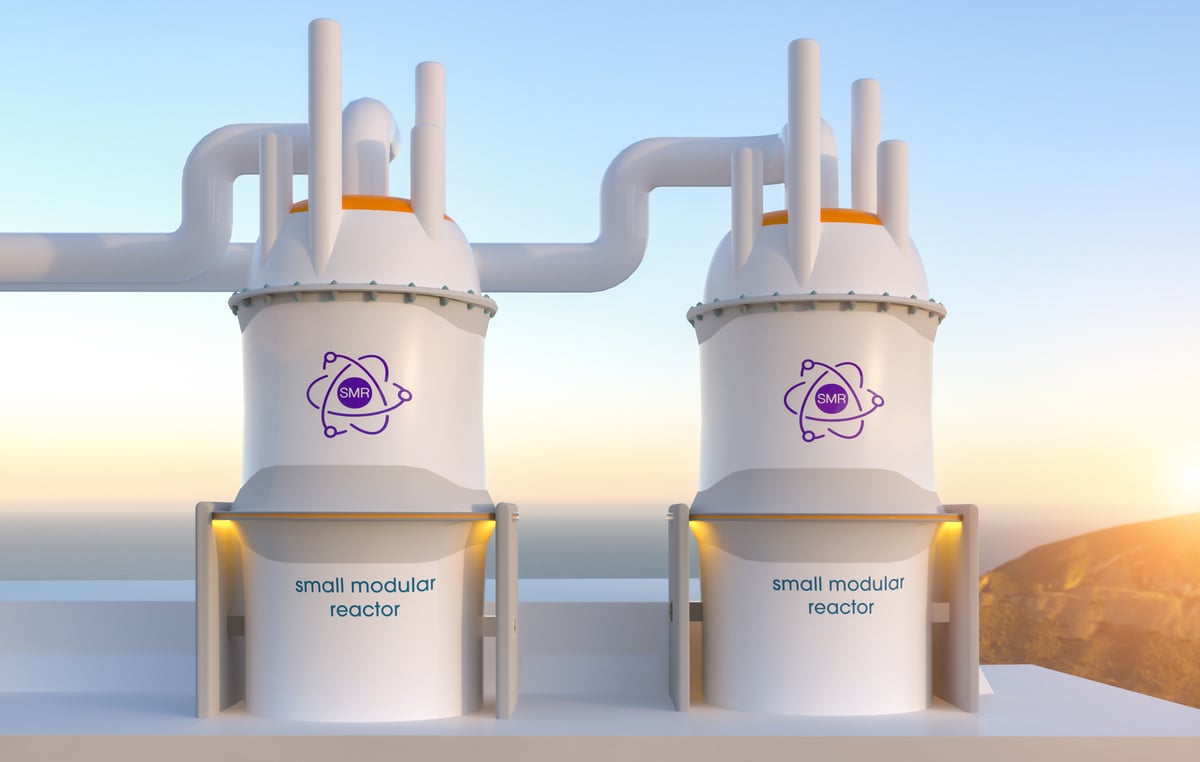
NuScale Power ($SMR), a developer of small modular reactors (SMRs), stands at an intriguing crossroads as artificial intelligence's insatiable appetite for electricity reshapes the energy sector. With a recent 40% stock correction bringing its market capitalization to approximately $4 billion, the company finds itself positioned to capitalize on what many energy analysts consider the defining power challenge of the coming decade. The question for investors isn't whether SMRs will become important—it's whether NuScale will emerge as a dominant player in this nascent industry.
The confluence of technological opportunity and valuation reset has created what some market observers view as a compelling entry point. Major technology companies and data center operators are increasingly desperate for reliable, carbon-free baseload power to support their expanding AI infrastructure. This demand dynamic has transformed the once-niche SMR sector into a focal point for institutional investors, venture capital firms, and energy majors alike. However, the opportunity comes with substantial execution risk, unproven commercialization pathways, and intensifying competition from well-capitalized rivals.
The Opportunity: AI's Relentless Power Appetite
The electrical demands of artificial intelligence infrastructure represent a genuine structural shift in global energy markets. Data centers supporting large language models, machine learning training, and AI inference consume extraordinary amounts of power—often requiring dedicated generating capacity that traditional grid infrastructure struggles to provide. Major technology firms including OpenAI, Google, Microsoft, and Meta have all publicly acknowledged that power availability could become a limiting factor in their ability to expand AI capabilities.
This environment has elevated NuScale Power's core value proposition: small modular reactors designed to provide:
- Flexible deployment: SMRs can be installed in locations unsuitable for traditional large nuclear plants
- Incremental capacity addition: Data centers can add power as needs grow without massive upfront infrastructure buildouts
- Carbon-free baseload power: Twenty-four-hour operation without the intermittency challenges of renewables
- Industrial heat applications: Beyond electricity, SMRs can serve high-temperature industrial processes
NuScale's technology focuses on pressurized water reactor designs that scale down the proven nuclear architecture into more modular, factory-constructed units. The company has received preliminary regulatory blessing from the U.S. Nuclear Regulatory Commission and maintains partnerships with utilities exploring SMR deployment.
Market Context: Competition Intensifies as Stakes Rise
While NuScale Power occupies a prominent position in the SMR conversation, it operates in an increasingly crowded competitive landscape. The company faces direct competition from specialized SMR developers and indirect competition from technology giants making their own power bets.
Direct SMR Competitors:
- Oklo Inc. ($OKLO), another prominent SMR developer, has captured significant investor attention and achieved a substantial valuation despite similar early-stage characteristics
- X-energy, backed by venture capital and strategic investors
- TerraPower, supported by Bill Gates and focused on advanced reactor designs
- Commonwealth Fusion Systems, pursuing fusion technology as an alternative approach
Indirect Competition and Headwinds:
- Constellation Energy ($CEG) has announced partnerships with major technology companies and holds operational nuclear assets
- NextEra Energy ($NEE) and other traditional utilities are exploring renewable combinations with battery storage
- Tech giants themselves are pursuing power partnerships directly with existing nuclear operators
- Natural gas remains a lower-risk, faster-deployable option for data center operators
The regulatory environment also presents both opportunity and risk. While the Biden administration and bipartisan coalitions have supported advanced nuclear development through the ADVANCE Act and the HALEU program (High-Assay Low-Enriched Uranium supply initiative), permitting timelines remain uncertain. NuScale Power has experienced project delays in the past, with its planned Utah deployment encountering extended regulatory reviews.
Investment Case: Growth Potential Versus Unproven Execution
For equity investors, NuScale Power's appeal rests on three foundational pillars:
1. Market Expansion Thesis If artificial intelligence demand for power proves as consequential as many analysts project, SMR capacity could evolve from experimental to commercially essential within the next decade. A successful company in this space could command substantial premium valuations similar to how renewable energy companies like NextEra Energy trade at 20-30x earnings multiples.
2. Valuation Reset Opportunity The 40% recent correction has reduced entry valuations for investors who view the company's long-term thesis as intact. The $4 billion market capitalization, while not trivial, remains small relative to the addressable market for AI-era power infrastructure, which energy consultants estimate could exceed $100+ billion annually by 2035.
3. Catalysts Ahead Near-term stock catalysts could include:
- Successful commercial deployment announcements
- New customer partnerships with data center operators or technology companies
- Regulatory clearance for accelerated permitting pathways
- Facility construction milestones and financing announcements
Material Risks Warrant Equal Emphasis:
- Technology risk: SMRs remain unproven at commercial scale; manufacturing and deployment could reveal unforeseen engineering or cost challenges
- Commercialization delays: Nuclear projects historically exceed timelines and budgets; extended permitting cycles could delay revenue generation
- Capital intensity: NuScale Power requires billions in development capital before achieving positive cash flow; future dilution through equity or debt financing remains probable
- Regulatory shifts: Changes in nuclear policy, uranium supply disruptions, or heightened safety requirements could undermine economic assumptions
- Competitive displacement: Faster-moving competitors or alternative technologies (fusion, advanced geothermal, next-generation solar) could capture market share
Why This Matters for Investors
Beyond NuScale Power itself, the company's performance will serve as a real-world test case for whether the SMR sector can deliver on decades of promises. Success would validate alternative nuclear approaches and potentially unlock enormous capital flows into advanced energy infrastructure. Failure—or continued delays—could reset investor expectations for the entire sector and advantage larger incumbents like NextEra Energy or Constellation Energy who control existing nuclear assets.
For growth-oriented investors with substantial risk tolerance, NuScale Power represents a leveraged play on AI-driven energy demand coupled with nuclear sector re-rating. For value-conscious investors, the stock remains speculative without proven commercial milestones or clear pathways to profitability.
The $4 billion valuation implies the market is pricing in meaningful execution success but not dominance. This represents genuine middle ground—neither a distressed micro-cap nor a richly valued growth stock. The risk-reward profile depends almost entirely on management's ability to convert technological capability into commercial deployment within compressed timelines.
As artificial intelligence reshapes energy markets and corporate power strategies, NuScale Power occupies a strategically significant position. However, investors must distinguish between the compelling long-term thesis for SMRs and the very real execution challenges facing individual companies. The 40% correction has made the risk-reward more balanced—but not safe.