
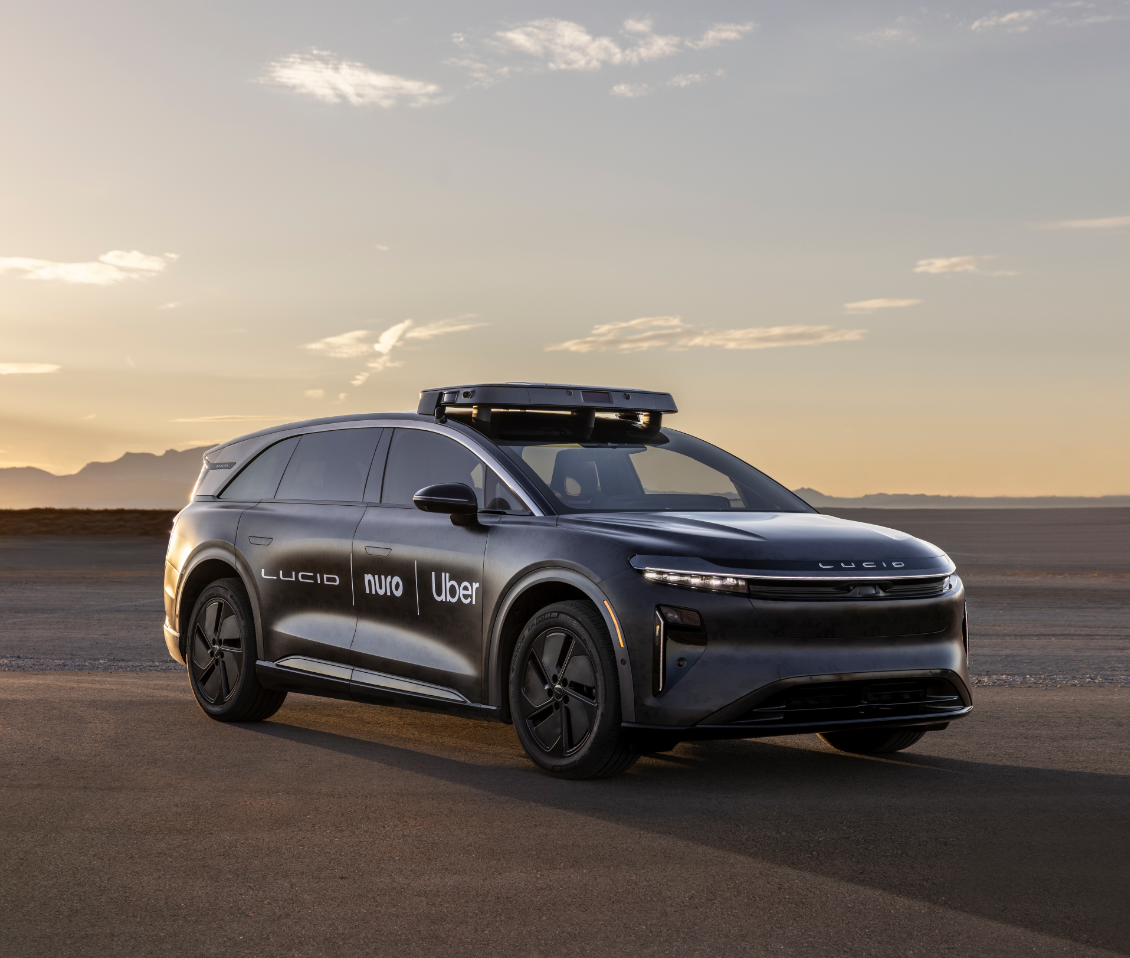
$UBER positioned itself as one of Wall Street's most intriguing plays on autonomous vehicles, not by manufacturing self-driving cars, but by doing what it does best: operating the platform that connects riders with them. The ride-hailing giant has assembled an impressive coalition of over 20 active partnerships with autonomous vehicle developers and technology providers, including Waymo, Zoox, Nvidia, and Stellantis, creating a networked ecosystem that sidesteps the capital-intensive burden of vehicle manufacturing while maintaining control of the consumer experience and data layer.
This strategic positioning marks a fundamental departure from traditional automotive industry dynamics, where companies typically must invest billions in manufacturing infrastructure. Instead, Uber is architecting what analysts describe as a "platform-as-a-service" model for autonomous mobility—essentially becoming the operating system and marketplace through which self-driving vehicles reach consumers. The company's leverage stems from its existing technological advantages: a massive user base exceeding 130 million monthly active users globally, proprietary data on consumer mobility patterns, and an established logistics and support infrastructure already operating in thousands of cities worldwide.
The Partnership Strategy and Deployment Timeline
Uber's multi-pronged partnership approach reflects confidence in near-term autonomous vehicle maturation while hedging against uncertainty about which technology platform will ultimately dominate. By collaborating with Waymo—Alphabet's self-driving subsidiary that has logged millions of autonomous miles—alongside newer entrants like Zoox and Stellantis, the company diversifies its exposure across different autonomous vehicle development philosophies and timelines.
The company has set an ambitious but concrete deployment target: achieving Level 4 self-driving capabilities (vehicles capable of operating without human intervention in most conditions) across 28 cities by 2028. This six-year timeline positions $UBER ahead of many competitors while remaining within the range of most industry forecasts for widespread autonomous vehicle commercialization. Key deployment metrics include:
- 28 cities targeted for Level 4 self-driving by 2028
- 20+ active partnerships spanning vehicle manufacturers, autonomous tech providers, and semiconductor companies
- Control of consumer interface and data collection across all deployment markets
- Integration with existing Uber Eats and mobility infrastructure
The significance of owning "the consumer experience and data layer" cannot be overstated. As autonomous vehicles proliferate, the company capturing user data—routes, preferences, payment information, destination patterns—will possess invaluable artificial intelligence training data and consumer insights. Uber's existing dominance in ride-hailing positioning gives it an enormous first-mover advantage in this data accumulation phase.
Market Context and Competitive Landscape
The autonomous vehicle market represents one of the largest technological disruptions in transportation history, with projections suggesting the global autonomous vehicle market could exceed $1 trillion annually by 2040. Traditional automakers including Tesla ($TSLA), General Motors ($GM), and Ford ($F) are all investing heavily in autonomous technology, yet they face a different calculus than Uber.
While Tesla pursues a vertically integrated approach—manufacturing vehicles in-house while developing proprietary full self-driving software—Uber's model inverts this equation. Rather than betting on a single autonomous technology platform, the company gains optionality: if Waymo's technology achieves Level 4 first, Uber can scale rapidly. If Zoox or another partner demonstrates superior performance, Uber maintains the flexibility to rebalance its partnership portfolio.
This stands in contrast to General Motors' acquisition of Cruise and Ford's substantial investment in Argo AI, both of which require massive capital commitments and impose existential pressure to prove their underlying autonomous technology bets were correct. Uber's lighter capital model transfers execution risk to its partners while preserving the company's ability to scale quickly once autonomous vehicles prove reliable enough for consumer deployment.
Regulatory momentum also favors near-term deployment. Agencies like the National Highway Traffic Safety Administration (NHTSA) have increasingly signaled willingness to permit autonomous vehicle testing and limited deployment, particularly for ride-hailing applications where ride-sharing services can monitor vehicle performance and intervene if necessary. California, Arizona, and Texas—three of Uber's largest markets—have emerged as autonomous vehicle testing hotbeds with relatively permissive regulatory frameworks.
Investor Implications and Valuation Considerations
For equity investors, $UBER's autonomous vehicle strategy represents an embedded call option on a transformational technology shift. The company trades at approximately 8-10x forward earnings (as of late 2024), a reasonable multiple for a mature ride-hailing platform. However, the autonomous vehicle optionality is essentially free—incorporated into this valuation but not priced at a significant premium reflecting the $500+ billion+ opportunity if the company successfully scales robotaxi services.
Once Uber deploys autonomous vehicles at meaningful scale across its 28 target cities, the financial implications become extraordinary. Autonomous vehicles operating 24/7 without driver compensation could generate revenue per vehicle multiples higher than human-driven services, potentially compressing customer acquisition costs and dramatically expanding operating margins. Industry analysts estimate margins on autonomous ride-hailing could approach 40-50%, compared to current Uber Mobility margins in the 15-25% range.
The partnership strategy also deserves investor scrutiny. Unlike GM or Ford, which must justify autonomous vehicle investments to shareholders as core business transformations, Uber's partners shoulder primary capital and technological development risk. Waymo, Zoox, Stellantis, and Nvidia are betting their own shareholder capital on autonomous vehicle success—validating the underlying thesis while insulating Uber from technology-specific risks.
However, risks remain material. Autonomous vehicle technology maturation could extend beyond 2028 timelines. Regulatory setbacks—such as restrictions on autonomous vehicle deployment following accident investigations—could delay commercialization. Competition from vertically integrated competitors like Tesla could prove fiercer than anticipated, particularly if Tesla's autonomous capabilities mature faster than the partnership ecosystem.
Looking Forward
Uber's positioning in the autonomous vehicle revolution reflects a sophisticated understanding of how platform economics ultimately dominate hardware-centric industries. Rather than competing on manufacturing scale or autonomous technology research, the company is building the infrastructure through which autonomous vehicles will be monetized at consumer scale.
For investors seeking exposure to autonomous vehicles without the binary bet-the-company risk profile of pure-play autonomous vehicle stocks or traditional automakers, $UBER offers a compelling risk-reward balance. The company's massive existing user base, logistics infrastructure, and strategic partnership portfolio position it well for the transition to autonomous mobility—while maintaining profitability and cash generation through traditional ride-hailing and delivery services during the extended transition period. With deployment targets concrete, partnerships deep, and regulatory tailwinds building, Uber may represent the most pragmatic way for investors to gain autonomous vehicle exposure during this critical scaling phase.