
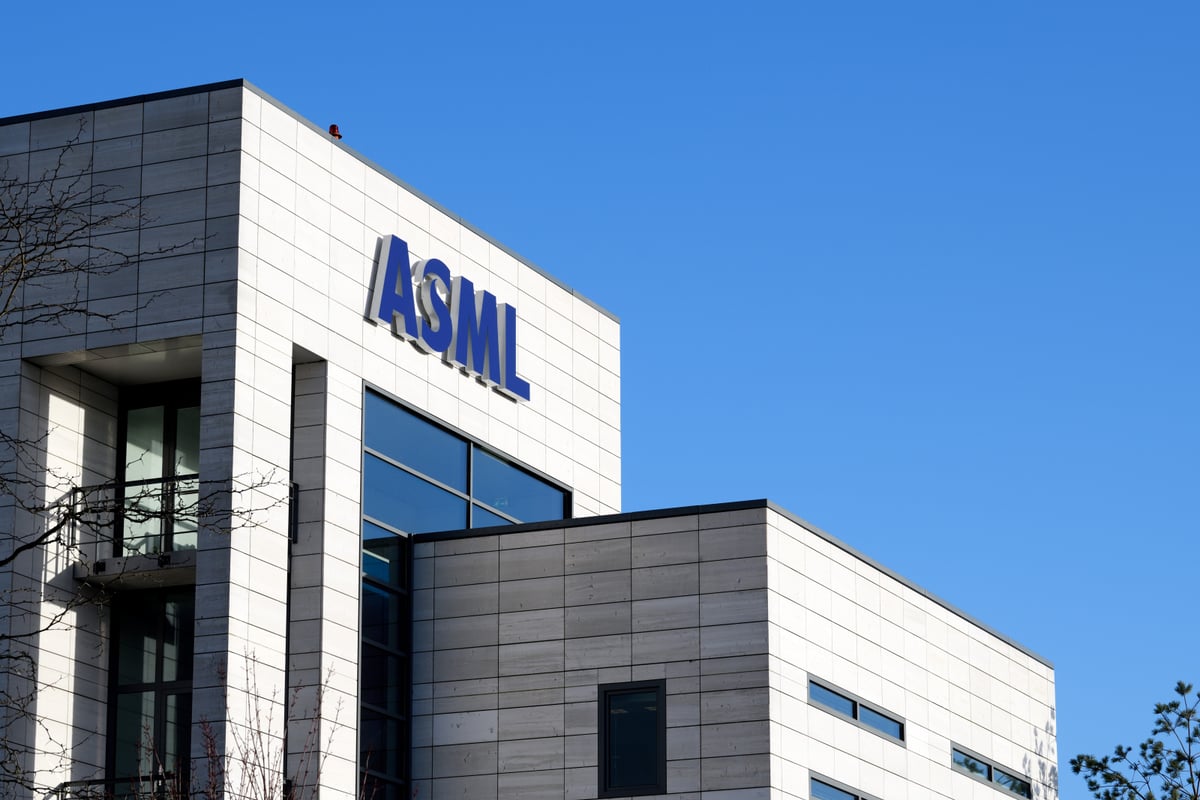
ASML Holding NV ($ASML) stock jumped 5.1% today following a bullish research note from Bernstein analyst Stacy Rasgon, who argues that the relentless demand for artificial intelligence chips will create a cascading effect of increased spending throughout the semiconductor supply chain, ultimately benefiting the Dutch semiconductor equipment manufacturer.
The rally reflects growing investor confidence in the strength of AI adoption and its ripple effects across chipmakers and equipment suppliers. Rasgon's analysis traces a clear path from AI chip demand to equipment sales: strong demand for AI processors at Nvidia ($NVDA) and Broadcom ($AVGO) will force chip manufacturers to expand capacity, requiring them to purchase more manufacturing equipment from suppliers like ASML.
The Bull Case for Semiconductor Equipment
ASML is the world's leading supplier of photolithography equipment used in semiconductor manufacturing. The company's extreme ultraviolet (EUV) and deep ultraviolet (DUV) lithography systems are essential for producing the most advanced chips, making it a critical link in the semiconductor production chain.
Rasgon's thesis hinges on several interconnected dynamics:
- Nvidia and Broadcom are experiencing unprecedented demand for AI chips, driving record revenues and profit margins
- Chip manufacturers, particularly Taiwan Semiconductor Manufacturing Company ($TSM), must expand production capacity to meet this demand
- Capacity expansion requires significant capital expenditures on manufacturing equipment
- ASML stands to benefit directly as equipment spending increases across the industry
This supply chain logic has proven prescient in past technology cycles. When demand for GPUs and data center chips accelerated, foundries ramped capital equipment spending within quarters, benefiting equipment suppliers substantially. The AI boom appears to be following a similar pattern, but with potentially longer duration and greater magnitude than previous cycles.
Market Context: The AI Equipment Tailwind
The semiconductor equipment industry has experienced significant volatility in recent years, with cyclical downturns alternating with periods of intense spending. The current AI cycle is reshaping this traditional pattern by creating sustained, multi-year demand for advanced chip production capacity.
ASML has been the primary beneficiary of industry equipment spending throughout the past decade, with the company establishing near-monopolistic dominance in EUV technology. No competitor currently offers comparable EUV systems, giving ASML substantial pricing power and market share in the most advanced semiconductor production processes.
The current market environment presents several tailwinds for ASML:
- Geopolitical support: U.S. and allied governments are funding domestic chip capacity through subsidies like the CHIPS Act, creating additional equipment demand
- AI adoption acceleration: Every major cloud provider and enterprise is rushing to build AI infrastructure
- Process node migration: Advanced AI chips require cutting-edge manufacturing, driving demand for ASML's most sophisticated systems
- Limited competition: ASML's technological moat in EUV remains virtually insurmountable
However, the company faces headwinds from Chinese market restrictions. U.S. export controls have limited ASML's ability to sell advanced equipment to Chinese chipmakers, constraining a significant portion of potential revenue. This regulatory uncertainty adds volatility to investor sentiment around the stock.
Investor Implications: Playing the AI Supply Chain
Rasgon's bullish call reflects a broader Wall Street recognition of ASML's position as a core beneficiary of the AI infrastructure buildout. As an indirect play on AI demand, ASML offers investors exposure to the semiconductor equipment cycle without the direct competition and margin pressures facing chip designers and manufacturers.
For equity investors, ASML represents a compelling thesis on several fronts:
- Valuation support: Equipment spending typically grows faster than chip industry revenues during strong cycles, supporting premium valuations for suppliers
- Predictability: ASML has high visibility into near-term equipment demand through customer guidance and order backlogs
- Margin profile: Equipment sales carry higher gross margins than chip manufacturing, providing operating leverage
- Dividend yield: The company has recently initiated shareholder returns despite significant reinvestment needs
That said, investors should recognize the cyclical nature of semiconductor equipment spending. Equipment demand ultimately depends on sustained chip demand and profitability. Any slowdown in AI adoption or deterioration in cloud computing economics could rapidly reverse the positive thesis.
The stock's 5.1% gain today reflects institutional investors' recognition that AI demand appears durable enough to drive a multi-year equipment upcycle. ASML's order book and backlog will likely attract analyst attention in upcoming earnings reports as investors seek confirmation that the AI tailwind is materializing into actual equipment orders.
Looking Ahead: The Equipment Cycle Inflection
The coming quarters will be critical for validating the bull case. Investors should monitor ASML earnings reports for evidence of accelerating orders from TSMC and other foundries. Guidance from ASML management regarding equipment demand and capacity will provide crucial signals about the durability of the AI-driven equipment cycle.
If Rasgon's thesis proves correct, ASML could be in the early stages of a significant earnings expansion cycle. The company's monopolistic position in EUV technology, combined with sustained AI infrastructure spending, creates an unusually favorable setup for a semiconductor equipment supplier in a mature industry. Today's rally suggests that the investment community is increasingly convinced that this opportunity is real and durable.