
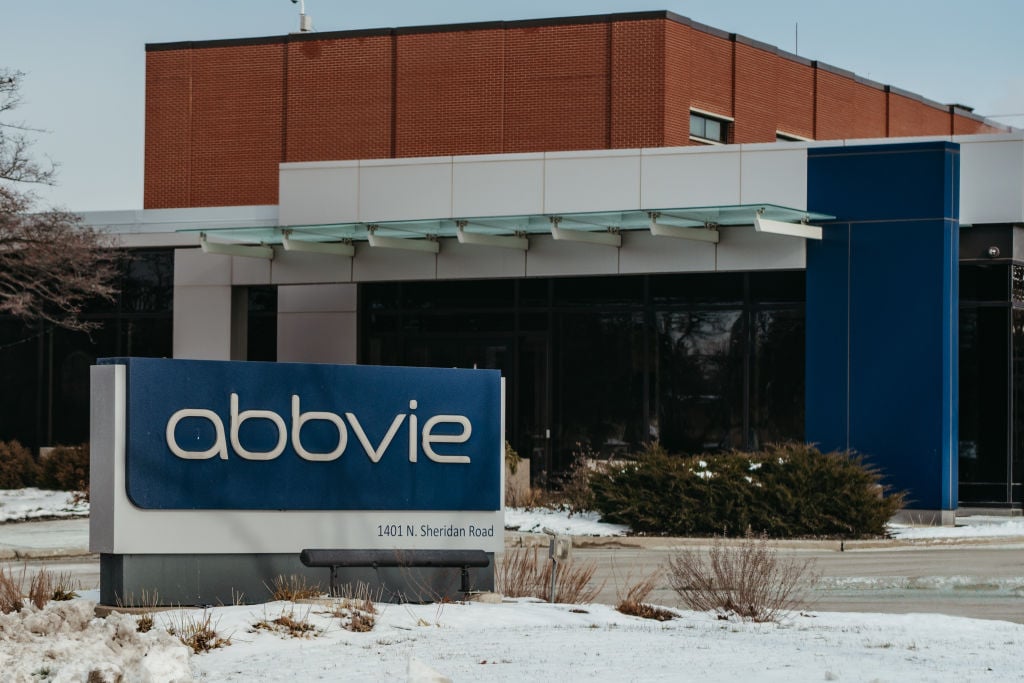
Healthcare's Dividend Gems: Why $ABBV and $BMY Stand Out for Income Investors
AbbVie and Bristol Myers Squibb have emerged as rare bright spots in the healthcare sector, offering dividend yields and growth trajectories that appeal to conservative, income-focused investors seeking stability amid industry headwinds. While many pharmaceutical and healthcare companies struggle to balance research investments with shareholder returns, these two firms have demonstrated the ability to deliver both—a feat that increasingly separates winners from the rest of the pack in a competitive landscape.
Dividend Strength in a Challenging Sector
The healthcare sector has historically been viewed as a haven for dividend investors, yet the landscape has become increasingly treacherous. Patent expirations, regulatory pressures, and the high cost of drug development have forced many companies to make difficult choices about capital allocation. AbbVie ($ABBV) and Bristol Myers Squibb ($BMY) represent exceptions to this rule, each offering compelling reasons for dividend-focused portfolios.
AbbVie stands out as a Dividend King, a distinction earned by maintaining or growing its dividend for at least 50 consecutive years. The company currently offers a 3.4% dividend yield, positioning it well above the broader market average and even outpacing many Treasury bond yields. More importantly, AbbVie has successfully navigated one of the pharmaceutical industry's most challenging transitions: the decline of Humira, its blockbuster immunology treatment that once generated massive revenues but faced biosimilar competition.
The company's pivot demonstrates management's ability to execute during periods of significant patent cliff risk. New treatments Skyrizi and Rinvoq have emerged as critical revenue replacements, indicating that AbbVie's dividend growth trajectory is supported by genuine business innovation rather than financial engineering. For patient investors willing to hold for extended periods, this track record of adaptation suggests sustainable dividend growth ahead.
Bristol Myers Squibb ($BMY) presents a different but equally compelling opportunity. With a 4.4% dividend yield, the company offers one of the highest yields available among major pharmaceutical firms—a substantial premium to the S&P 500's typical dividend yield of 1.5-2%. This higher yield reflects both market appreciation for the company's income generation and appropriate recognition of the business risks it navigates.
Like AbbVie, Bristol Myers Squibb confronts the persistent specter of patent cliffs, with multiple drugs approaching exclusivity loss. However, the company has positioned its oncology portfolio as the engine driving future growth. Oncology treatments command premium pricing and often enjoy extended revenue lifecycles, providing a more durable foundation for dividend sustainability than treatments facing commoditization through generic competition.
Market Context: Why This Matters Now
The current macroeconomic environment has fundamentally altered the landscape for dividend investors. With the Federal Reserve having raised interest rates significantly from historic lows, the opportunity cost of holding lower-yielding stocks has increased dramatically. Treasury bills and money market funds now offer 4-5% yields with minimal risk, creating intense competition for investor capital traditionally deployed in dividend stocks.
In this context, AbbVie's 3.4% yield and Bristol Myers Squibb's 4.4% yield begin to look more attractive, particularly when coupled with the expectation of dividend growth. A dividend that increases year-over-year can eventually exceed Treasury yields while providing exposure to corporate earnings growth and equity appreciation—benefits unavailable from fixed-income instruments.
The healthcare sector faces distinctive structural challenges that make selectivity essential:
- Patent cliff risk: Blockbuster drugs losing exclusivity create revenue cliffs that must be offset by pipeline innovations
- Regulatory uncertainty: Changes in drug pricing policies, particularly around Medicare negotiation, create unpredictable margin pressures
- R&D intensity: Sustained investment in research and development competes with shareholder returns for capital
- Valuation compression: The sector trades at modest multiples relative to history, reflecting these genuine risks
AbbVie and Bristol Myers Squibb have demonstrated capability in managing these headwinds through disciplined capital allocation, successful product innovation, and strategic M&A activity. Their ability to simultaneously maintain growing dividends while investing in future growth distinguishes them from peers that have chosen to sacrifice shareholder returns for pipeline development.
Investor Implications: Building Resilient Income Portfolios
For investors prioritizing current income alongside capital preservation, these two names merit serious consideration for several reasons:
Dividend Sustainability: Both companies generate substantial free cash flow relative to their dividend payments. A payout ratio below 60-70% of free cash flow is typically considered sustainable and allows room for dividend growth without jeopardizing financial health or necessary business investments.
Growth Profile: Unlike mature utility or REIT dividend stocks that offer high yields but limited growth, AbbVie and Bristol Myers Squibb operate in industries where successful innovation can drive earnings growth of 5-10% annually. This combination—current income plus growth—is increasingly difficult to find in equity markets.
Valuation: Healthcare stocks have not participated fully in the artificial intelligence-driven rally that has lifted technology valuations to historic extremes. This relative valuation weakness creates an opportunity for contrarian investors seeking reasonable entry points in quality dividend-paying companies.
Time Horizon Advantage: These stocks are specifically suited for buy-and-hold investors with 10+ year time horizons. The transition periods these companies navigate—AbbVie's Humira transition and Bristol Myers Squibb's oncology pivot—will play out over years, and near-term volatility may create opportunities for patient capital to accumulate shares at reasonable prices.
The risk, of course, remains real. Pharmaceutical companies operate in highly regulated industries where a single negative FDA decision or clinical trial failure can repruce valuations. Patent cliff timing is often unpredictable, and new competitive treatments can emerge unexpectedly. However, for investors comfortable with these sector-specific risks, the dividend yields and growth potential on offer represent compelling value relative to alternatives.
Both AbbVie and Bristol Myers Squibb exemplify the type of selective opportunity that patient dividend investors should seek: established market positions, proven management execution, reasonable valuations, and meaningful yields supported by genuine business economics. In a healthcare sector characterized by headline risk and structural challenges, these two companies have earned their place as exceptions worth considering for conservative, income-focused portfolios.