
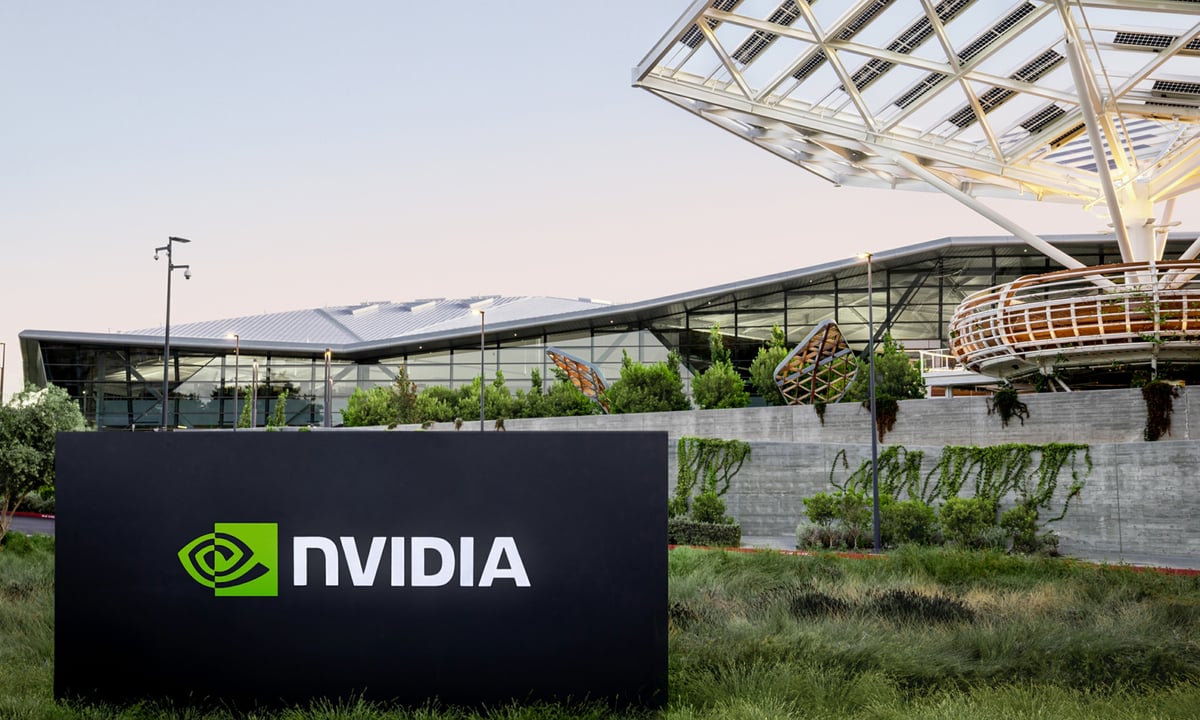
Three AI Stocks Emerge as Top Picks for $10K Portfolio: Nvidia, Palantir, TSMC
As artificial intelligence reshapes the global technology landscape, strategic investors are identifying opportunities across the AI value chain—from chip manufacturers to software platforms to infrastructure providers. A diversified approach allocating $10,000 equally among three leaders highlights how investors can gain broad exposure to the sector's most compelling opportunities: Nvidia Corporation ($NVDA), Palantir Technologies ($PLTR), and Taiwan Semiconductor Manufacturing Company ($TSM).
This tri-partite investment strategy reflects a recognition that the AI boom extends beyond any single company or product category. Rather than betting everything on one winner, this approach captures exposure to the hardware enablers, software innovators, and foundational chip manufacturers that collectively power the artificial intelligence revolution.
The Three-Pronged AI Opportunity
The recommended allocation splits the $10,000 investment equally, dedicating approximately $3,333 to each company, creating a balanced exposure to different segments of the AI ecosystem.
Nvidia ($NVDA) serves as the hardware and software backbone of modern AI systems. The company's dominance rests on several competitive advantages:
- CUDA platform: Nvidia's proprietary computing architecture has created a near-moat in AI hardware, with CUDA becoming the standard framework for machine learning development
- Comprehensive ecosystem: Beyond graphics processing units (GPUs), Nvidia offers an integrated hardware-software solution that reduces friction for enterprises deploying AI at scale
- Strategic partnerships: The company has cultivated deep relationships with major cloud providers, enterprise software vendors, and AI research institutions
Palantir Technologies ($PLTR) occupies a distinctive niche in the AI software space, particularly for data synthesis and enterprise intelligence:
- AI Platform capabilities: Palantir's software excels at aggregating disparate data sources and extracting actionable insights through machine learning
- Government and enterprise focus: The company maintains long-standing relationships with U.S. government agencies and increasingly with Fortune 500 enterprises
- Data synthesis advantage: While many AI companies focus on narrow, specific tasks, Palantir's platform handles the complex, messy reality of integrating multiple data streams
Taiwan Semiconductor Manufacturing Company ($TSM) represents the foundational infrastructure layer, manufacturing the advanced chips that power AI applications:
- Essential manufacturing: TSMC produces the most advanced semiconductor chips for all major AI chipmakers, including Nvidia
- Supply chain criticality: As geopolitical tensions highlight semiconductor supply chain vulnerabilities, TSMC's role becomes increasingly strategically important
- Technology leadership: The company maintains manufacturing capabilities at the cutting edge of semiconductor fabrication technology
Market Context and Competitive Landscape
The artificial intelligence market has transitioned from hype cycle to genuine infrastructure buildout, with enterprises and governments increasingly committed to substantial AI investments. This shift creates opportunities across the entire value chain, yet also introduces distinct risks for single-company exposure.
Hardware and infrastructure form the foundation of all AI applications. Nvidia's position appears unassailable in the near term, with demand for advanced GPUs significantly outpacing supply. However, competitors including AMD and custom solutions from cloud providers represent emerging alternatives. Taiwan Semiconductor Manufacturing's role becomes increasingly critical as the geopolitical importance of semiconductor manufacturing rises, with the U.S. government providing subsidies through the CHIPS Act to incentivize domestic production.
Software and data applications represent a less concentrated market. Beyond Palantir, companies including Microsoft ($MSFT), Google ($GOOGL), and Salesforce ($CRM) are integrating AI capabilities into their platforms. Palantir's differentiation lies in its ability to handle complex enterprise data integration—a less glamorous but potentially more defensible niche than generative AI features.
The AI market landscape reveals clear segmentation:
- Chip design and hardware: Nvidia dominates, with limited near-term competition
- Manufacturing capacity: TSMC controls the most advanced production facilities
- AI software and applications: Increasingly crowded, with Palantir focused on enterprise data synthesis
- Cloud platforms and large language models: Dominated by mega-cap tech companies
Investor Implications and Risk Considerations
This three-stock allocation strategy offers several advantages for investors seeking AI exposure:
Diversification benefits: Rather than concentrating capital in a single company, the $10,000 allocation spreads risk across different segments of the AI value chain. A disruption to Nvidia's GPU market would be devastating to $NVDA shareholders but would only represent a one-third loss for this diversified portfolio.
Complementary exposure: The three companies serve different functions. Nvidia focuses on hardware and computational platforms; Palantir emphasizes enterprise software and data integration; TSMC provides foundational manufacturing. Together, they provide exposure to the complete AI infrastructure stack.
Valuation considerations: Each company operates in a different competitive environment, suggesting different valuation multiples and growth expectations. This diversification can help moderate portfolio volatility.
However, significant risks warrant consideration:
- Nvidia concentration risk: The company's dominance in AI chips creates a single point of failure for two of three portfolio constituents
- Execution risk at Palantir: The company's ability to scale beyond government applications and traditional enterprise customers remains unproven
- Geopolitical risk at TSMC: Taiwan's political status creates potential supply chain disruptions affecting the entire sector
- Valuation risk: All three companies have experienced substantial price appreciation as AI enthusiasm has grown
- Competitive threats: Numerous well-capitalized competitors in each segment could erode market positions
Looking Forward
The artificial intelligence revolution will likely generate wealth across the entire value chain—from chip manufacturers to software companies to infrastructure providers. A $10,000 allocation split equally among Nvidia, Palantir, and Taiwan Semiconductor Manufacturing provides investors with a structured approach to capturing exposure to multiple winners rather than attempting to identify a single dominant player.
This strategy acknowledges both the transformative potential of artificial intelligence and the reality that the sector remains in early stages of development. By combining exposure to proven hardware leaders, emerging software specialists, and foundational manufacturers, investors create a balanced portfolio positioned to benefit from AI's expansion across enterprise and government applications.
As the sector matures and clearer winners emerge, individual investors may wish to rebalance their allocations. For now, the three-company approach offers a pragmatic compromise between concentrated conviction and diversified risk management—appropriate for investors seeking meaningful exposure to the artificial intelligence opportunity without betting everything on a single outcome.