
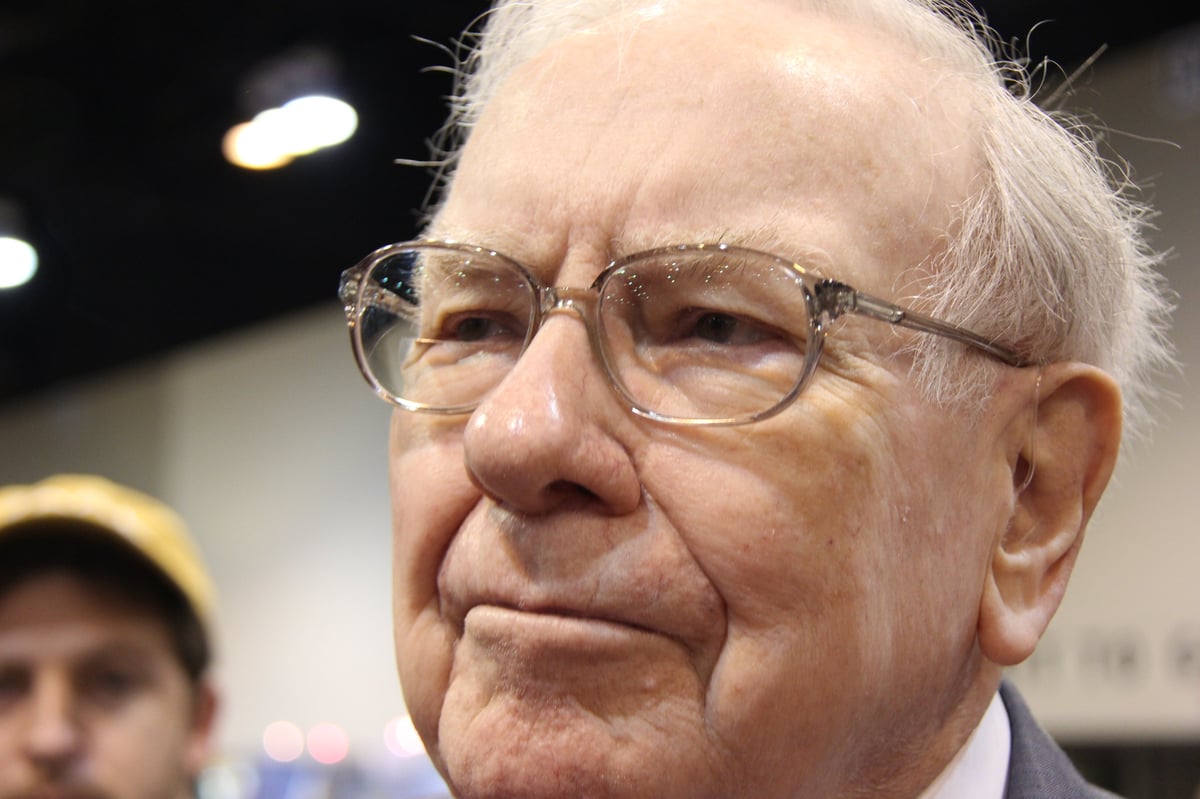
Warren Buffett's Unexpected Exit: A 19-Month Pause on His Favorite Investment
Warren Buffett stepped down as Berkshire Hathaway CEO on December 31, 2025, concluding one of the most influential investment careers in financial history. Remarkably, the Oracle of Omaha—who had spent $78 billion repurchasing Berkshire Hathaway shares over a six-year period from July 2018 to June 2024—conspicuously refrained from buying back a single share for the 19 months immediately preceding his retirement. This uncharacteristic pause in capital allocation to what Buffett himself has called his favorite stock signals a nuanced message about market valuations and investment discipline that deserves careful examination from investors and market observers.
The timing of Buffett's departure comes as Berkshire Hathaway has shifted to a net-selling position across the broader market. Over the past 13 consecutive quarters, the legendary investor and his team executed a significant reduction in equity holdings, a dramatic reversal from the company's traditional stance as a disciplined buyer of undervalued securities. This extended selling spree, combined with the suspension of buybacks, underscores Buffett's longstanding conviction that capital should only be deployed when prices offer genuine value—a principle he has upheld throughout his decades-long career despite intense pressure to remain constantly invested.
The Numbers Behind the Buyback Pause
The magnitude of Berkshire Hathaway's historical share repurchase program cannot be overstated. Between July 2018 and June 2024, the company committed $78 billion to buying back its own stock, reflecting Buffett's confidence in the company's intrinsic value during that period. However, the complete absence of repurchases for 19 months—from mid-2024 through Buffett's December 2025 retirement—represents a dramatic departure from this pattern.
Key metrics illustrate the shift:
- $78 billion deployed in buybacks from July 2018 to June 2024
- Zero dollars repurchased in the 19 months preceding retirement
- 13 consecutive quarters of net selling in the broader equity portfolio
- Berkshire Hathaway shares trading at valuations Buffett deemed unattractive for repurchase
This pause is particularly significant because share repurchases represent management's most direct statement about valuation. When Buffett suspended buybacks—his favorite capital allocation tool—he was effectively signaling that Berkshire Hathaway shares had risen above levels offering adequate margin of safety. Investors familiar with his philosophy understand that this conservative approach, while it may disappoint those seeking continuous buyback support, reflects the disciplined value-investing principles that have generated superior long-term returns.
Market Context and the Broader Selling Spree
Buffett's cautious stance on valuations must be understood within the context of post-pandemic equity market dynamics. The period from mid-2024 through his retirement coincided with elevated equity valuations across much of the market, particularly in technology and high-growth sectors. Berkshire Hathaway's shift to net selling—maintaining this position for 13 consecutive quarters—suggests the investment team viewed most securities as offering insufficient margin of safety relative to underlying business fundamentals.
This contrasts sharply with the broader market environment, where retail and institutional investors have remained largely committed to equities. The divergence between Buffett's actions and broader market sentiment represents a notable inflection point. Historically, Buffett's selling has preceded periods of market correction or volatility, though predicting the precise timing of market movements remains notoriously difficult.
The competitive landscape of large-cap value investing has also shifted. Traditional peers in the value space have struggled to replicate Berkshire's disciplined approach, with many forced to deploy capital at valuations they privately questioned. Buffett's willingness to sit idle with substantial cash reserves—rather than force deployment into unattractive opportunities—demonstrates the advantages of scale, brand equity, and multi-decade track records that allow for patient capital allocation.
Succession Planning and Continuity of Philosophy
Greg Abel, who assumes the role of CEO following Buffett's retirement, has already signaled continuity in investment philosophy by resuming Berkshire Hathaway share repurchases at what he considers more attractive valuations. This represents an important indicator that the investment framework developed over Buffett's tenure will persist under new leadership. Rather than abandoning buybacks entirely, Abel has demonstrated the same price-conscious discipline—only repurchasing when valuations offer genuine opportunity.
This measured approach to capital allocation under new leadership may provide comfort to shareholders concerned about potential philosophical shifts. The fact that Abel resumed repurchases only when valuations became more attractive—rather than committing to continuous buybacks regardless of price—demonstrates that the disciplined, value-focused methodology remains intact.
Investor Implications and Forward-Looking Considerations
For Berkshire Hathaway shareholders, this transition raises several important considerations:
- Valuation vigilance: The 19-month buyback pause and subsequent resumption at lower valuations suggests management believes share price had become disconnected from intrinsic value
- Market positioning: The 13 quarters of net selling indicate a cautious stance on overall equity market valuations
- Leadership continuity: Abel's immediate resumption of buybacks—at appropriate prices—indicates the investment philosophy will continue under new management
- Capital allocation priorities: Berkshire's massive cash position (typically in the tens of billions) may be allocated to strategic acquisitions rather than buybacks if valuations remain elevated
Investors should recognize that Buffett's reluctance to repurchase Berkshire shares during the final 19 months of his tenure was not a vote of no-confidence in the company, but rather a statement about valuation discipline. This distinction matters considerably. A company managed by someone unwilling to deploy capital into his own equity at any price would represent a concerning signal; a company managed by someone willing to deploy capital only at prices offering genuine value represents exactly the kind of governance most long-term investors should seek.
The broader implications extend beyond Berkshire Hathaway itself. In an era of seemingly permanent quantitative easing expectations, rising equity valuations, and pressure for capital deployment, Buffett's final message—that some periods warrant patience over action—carries weight for the entire investment industry.
Conclusion: The End of an Era and Its Lessons
Warren Buffett's retirement marks the end of a transformative era in investment history. His final major decision—to pause repurchases of his own company's shares—encapsulates the investment discipline that generated returns far exceeding benchmarks over six decades. By refraining from buybacks when valuations did not support them, even as pressure mounted to continuously deploy capital, Buffett demonstrated the principle that would ultimately define his legacy: the willingness to do nothing when the opportunity set fails to meet minimum return thresholds.
Greg Abel's assumption of the CEO role, combined with his measured approach to reinitiating repurchases only at attractive valuations, suggests this disciplined framework will endure. For equity investors, the transition serves as a reminder that in markets, patience—though increasingly unfashionable—remains a valuable competitive advantage. As valuations, interest rates, and market conditions inevitably evolve, Berkshire Hathaway's demonstrated commitment to value discipline will likely prove more durable than the consensus views that dominate any particular market cycle.