
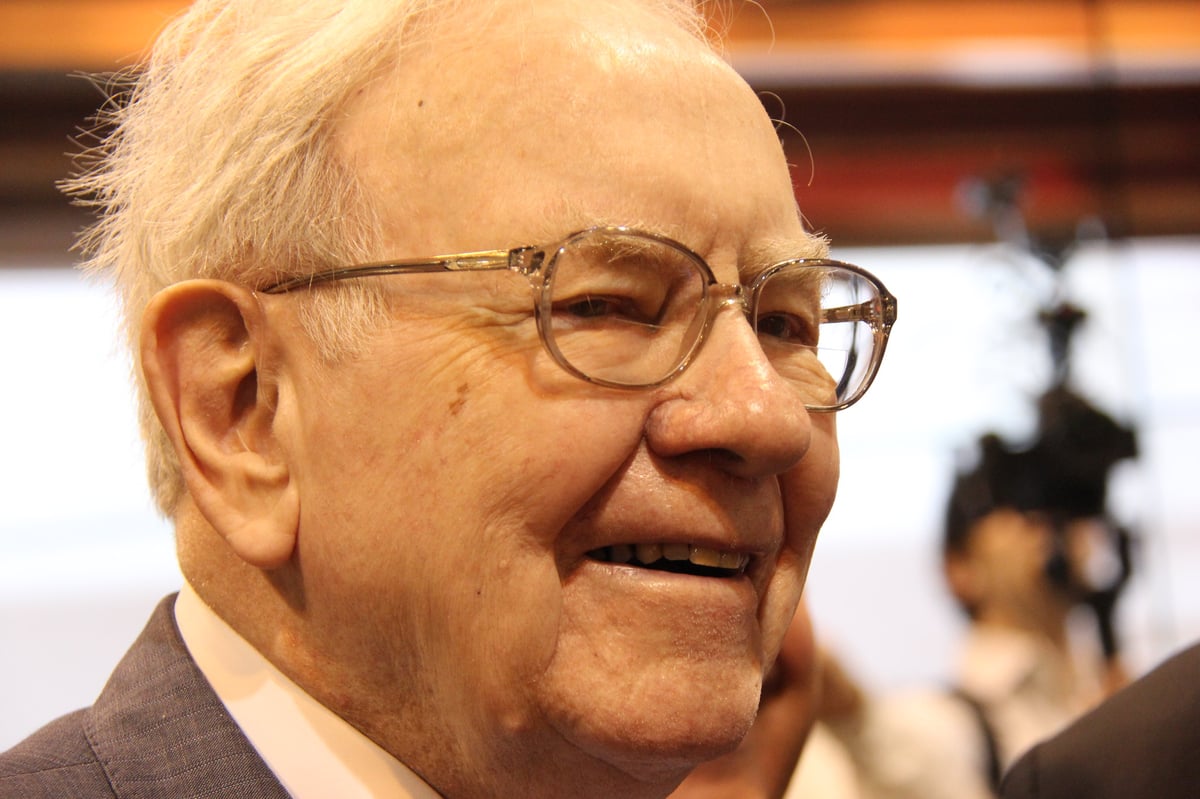
Buffett's Surprising Final Act as Berkshire CEO
Warren Buffett closed his legendary tenure as Berkshire Hathaway ($BRK.B) CEO with a notable investment flurry, deploying $3.5 billion across five carefully selected stocks in what marks a striking reversal of the legendary investor's recent portfolio behavior. This aggressive purchasing spree stands in sharp contrast to Buffett's extended selling posture: the Oracle of Omaha had been a net seller of equities for thirteen consecutive quarters, signaling deep skepticism about market valuations. Yet in this final chapter as active CEO, Buffett appears to have identified specific opportunities compelling enough to break his extended cash-accumulation strategy, suggesting these five holdings represent what he views as genuinely compelling investments at current price levels.
Among the quintet of purchases, Domino's Pizza ($DPZ) emerges as the crown jewel of Buffett's final investment round. The investment demonstrates particular conviction: Buffett has methodically accumulated a nearly 10% stake in the pizza delivery giant over the course of six consecutive quarters, revealing a patient, confidence-building accumulation strategy. This sustained buying pattern across multiple quarters indicates this was no opportunistic flutter but rather a deliberate capital deployment reflecting high confidence in the company's trajectory and valuation.
The Domino's Thesis: Execution and Valuation Confluence
The Domino's Pizza investment thesis rests on compelling operational fundamentals that validate Buffett's selection criteria. The company has demonstrated impressive same-store sales growth of 3.7%, a metric that reveals strong underlying business momentum and customer demand resilience. Equally important, Domino's has successfully expanded profit margins, indicating that management can grow the top line while simultaneously improving operational efficiency—a hallmark of quality business execution.
From a valuation perspective, Domino's trades at an enterprise multiple of approximately 19x earnings, representing a reasonable premium that reflects growth prospects without appearing stretched. This pricing sits in the sweet spot of Buffett's investment framework: a quality business with proven execution, trading at a price that offers value rather than speculation. Key operational metrics supporting the investment include:
- Consistent 3.7% same-store sales growth demonstrating market share gains and pricing power
- Margin expansion indicating operational leverage and efficient capital deployment
- 19x earnings valuation multiple suggesting reasonable growth expectations embedded in price
- Strong digital ordering capabilities and technology infrastructure driving customer engagement
The Domino's selection underscores Buffett's preference for consumer-facing businesses with recurring revenue models and proven pricing power—characteristics that have defined Berkshire's most successful long-term holdings.
Market Context: Breaking a Thirteen-Quarter Selling Streak
Buffett's investment activity must be understood against the backdrop of his extraordinary selling campaign. For thirteen consecutive quarters preceding this final quarter, the Berkshire Hathaway CEO had been liquidating equities, accumulating cash to record levels. This extended retreat from equity markets reflected legitimate concerns about valuation metrics, geopolitical uncertainty, and elevated interest rates that made cash holdings increasingly attractive.
The decision to deploy $3.5 billion signals a meaningful tactical shift. Rather than suggesting a complete abandonment of his cautious posture, this purchasing spree indicates selective opportunity recognition—the kind of disciplined capital deployment that has characterized Buffett's career. In a market environment where defensive investors remain anxious about valuations, his identification of five specific opportunities worthy of significant capital suggests these names possess defensive characteristics or attractive risk-reward profiles even amid broader market uncertainties.
The restaurant industry and quick-service delivery sector have faced headwinds from consumer spending pressures and labor cost inflation, yet Domino's has managed to deliver genuine same-store sales growth and margin expansion. This performance distinguishes DPZ from weaker peers and suggests superior competitive positioning, brand strength, and operational execution in a challenging sector environment.
Investor Implications: What the Final Quarter Reveals
For shareholders and market observers, Buffett's investment choices carry several important implications:
Signal of Selective Opportunity: After over three years of net selling, Buffett's willingness to deploy capital suggests he perceives select opportunities at reasonable valuations. This endorsement carries weight in a market where skepticism about equities remains elevated among sophisticated investors.
Quality-Over-Breadth Approach: The concentration of five stock purchases (rather than broader index exposure) reveals Buffett's continued faith in stock-picking discipline. Domino's represents the most significant commitment, suggesting this single investment may approach $1 billion or potentially exceed it given the sustained six-quarter accumulation.
Consumer Resilience Thesis: The selection of restaurant and food-delivery exposure suggests confidence in consumer spending resilience. Despite inflation, interest rate pressures, and recessionary concerns, Domino's continue to deliver solid same-store growth—signaling consumer demand remains more resilient than pessimists feared.
Valuation Realism: At 19x earnings, Domino's trades below many technology and growth-oriented peers despite superior profitability and cash generation. Buffett's selection suggests a belief that this valuation multiple provides attractive entry points for quality franchised business models with proven unit economics.
These investment decisions will influence successor CEO Greg Abel's strategic direction and capital allocation priorities at Berkshire Hathaway ($BRK.A, $BRK.B), potentially signaling the investment thesis and sector preferences that will guide the company's portfolio construction in coming years.
Looking Forward: Legacy of Selective Conviction
Buffett's final quarter as active Berkshire Hathaway CEO encapsulates the investment philosophy that built the conglomerate's legendary track record: patience combined with decisive action when compelling opportunities emerge. After years of cash accumulation and selective selling, the deployment of $3.5 billion across five stocks—with Domino's Pizza anchoring the portfolio as the best-positioned investment—reveals an investor who remains confident in identifying quality businesses at reasonable valuations.
The Domino's investment, particularly the sustained six-quarter accumulation of nearly a 10% stake, demonstrates that even in an era of uncertainty and elevated valuations, disciplined capital allocation can identify defensive, profitable businesses with proven competitive advantages. The company's 3.7% same-store sales growth and margin expansion occur precisely when industry doubters predicted weakness, validating the quality of Buffett's selection.
For investors watching Berkshire Hathaway and analyzing Buffett's final investment moves, the message is clear: even reduced from his former prominence, the investor's selections command serious attention. The fact that Domino's Pizza earned the "best of the bunch" designation among five $3.5 billion in commitments speaks to both the quality of the pizza delivery company's business model and the disciplined rigor with which the world's most famous investor continues to deploy capital.