
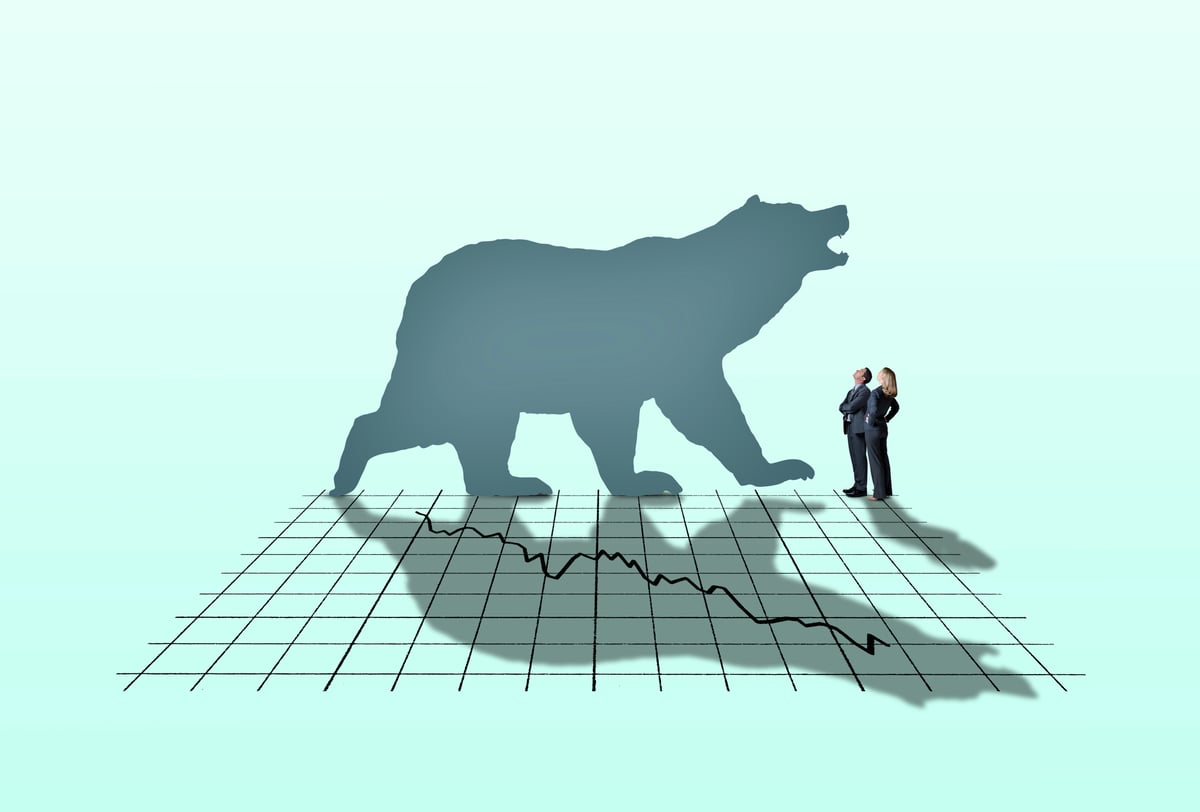
Markets Down 5% in Early 2026: Why Long-Term Investors Should Stay the Course
Equity markets have stumbled into the second quarter of 2026, with major indices posting notable declines that have rekindled recession fears among investors. The S&P 500 has fallen 4.95% year-to-date through March, while the Nasdaq Composite has suffered a steeper drop of 6.86%, according to recent market data. These pullbacks, though significant enough to capture headlines and trigger anxiety across trading floors and retail investor accounts alike, tell only a partial story—one that obscures the historical resilience of equity markets and the documented success of disciplined, long-term investment strategies.
For investors accustomed to the steady march of bull markets, the current correction serves as a sobering reminder that volatility remains an inherent feature of equity investing. Yet history offers a compelling counternarrative to the prevailing mood of caution, suggesting that these near-term setbacks are merely noise against the backdrop of decades-long wealth creation.
The Numbers Behind the Decline
The year-to-date performance figures reveal a tale of two markets, with growth-heavy indices experiencing sharper declines than their broader counterparts:
- S&P 500 decline: 4.95% year-to-date through March 2026
- Nasdaq Composite decline: 6.86% year-to-date through March 2026
- Sector-specific impact: Technology and growth stocks have borne the brunt of selling pressure, evidenced by the Nasdaq's outsize weakness
The divergence between the S&P 500 and Nasdaq Composite reflects the ongoing rotation out of mega-cap technology stocks that had dominated market leadership in recent years. This rotation, while creating near-term pressure on growth-oriented portfolios, is not unprecedented and does not necessarily portend a prolonged downturn.
Recession concerns have intensified amid the market weakness, with some investors pointing to the declines as confirmation of economic deterioration. However, equity market corrections of this magnitude occur with surprising regularity and do not consistently precede recessions. The current 5-6% decline remains well within the range of normal market behavior and does not yet approach the severity of bear market conditions, which are typically defined as 20% or greater declines.
Historical Perspective: Bull Markets Vastly Outlast Bear Markets
Perhaps the most important insight for long-term investors is one rooted firmly in history: bull markets have historically lasted significantly longer than bear markets, and the magnitude of gains during bull phases far exceeds the losses incurred during downturns. This asymmetry is perhaps the most powerful argument for maintaining investment discipline during periods of volatility.
The evidence is compelling. Since the beginning of the millennium, the S&P 500 has delivered nearly 343% in total returns through the current period. This figure encompasses multiple recessions, financial crises, geopolitical shocks, and pandemic-induced shutdowns. Investors who remained invested through each of these episodes—rather than attempting to time the market or sitting in cash—have been richly rewarded.
To contextualize the current 4.95% decline: it represents a minor setback relative to the long-term trajectory. An investor who purchased the S&P 500 index at the start of 2000 and held through every market downturn, including:
- The dot-com bubble burst (2000-2002)
- The financial crisis (2007-2009)
- The COVID-19 crash (March 2020)
- Numerous corrections of 10-20%
...would still enjoy gains approaching 343% on their original investment. This return dwarfs any temporary setback experienced along the way.
Market Context: Understanding the Current Environment
The current market weakness must be understood within the broader context of economic and monetary conditions. Several factors are contributing to the near-term pullback:
Monetary Policy Dynamics: Central banks worldwide remain in a precarious position, balancing inflation concerns against growth risks. The Federal Reserve's policy stance continues to influence equity valuations, and any signals of prolonged higher-for-longer interest rates create headwinds for growth stocks.
Valuation Reassessment: After an extended period of exceptional performance, certain sectors—particularly artificial intelligence and mega-cap technology—have undergone valuation compression. This is a natural and healthy process that creates buying opportunities for disciplined investors.
Economic Data Sensitivity: Markets have become increasingly reactive to economic data releases, with each report scrutinized for recession signals. The current sensitivity reflects legitimate economic uncertainties but also tends to amplify short-term volatility.
Sector Rotation: The outperformance of technology stocks in recent years has become increasingly concentrated among a handful of mega-cap names. The current diversification of gains across other sectors, while creating short-term weakness in the Nasdaq, may ultimately lead to a healthier, more sustainable market structure.
Historically, these periods of rebalancing and volatility have been followed by renewed gains. The key distinction between long-term investors and short-term traders is precisely this: long-term investors recognize that temporary declines are part of the investment journey, while short-term traders are paralyzed by them.
Investor Implications: Why Discipline Matters Now
For equity investors with horizons measured in years or decades rather than months, the current environment presents both a test of conviction and a potential opportunity. Several key implications deserve consideration:
Opportunity Cost of Market Timing: The market's bounce-back from corrections tends to be rapid and concentrated. Studies consistently show that missing the best trading days—often those immediately following sharp declines—can dramatically impair long-term returns. An investor who stayed out of the market during recovery periods would have forfeited a substantial portion of the 343% gains cited above.
Valuation Reset: Current weakness may be creating attractive entry points for investors with cash reserves or regular investment programs. Dollar-cost averaging through market downturns has historically been one of the most effective wealth-building strategies for long-term investors.
Portfolio Stress-Testing: For investors concerned about their allocation, the current environment provides valuable information about their true risk tolerance. Those experiencing excessive anxiety may need to reassess their asset allocation, but wholesale capitulation is rarely the correct response.
Dividend and Earnings: Despite market weakness, underlying corporate earnings and dividend payments continue, supporting the case for equity ownership over extended periods.
Looking Forward: The Long-Term Case Remains Intact
As markets digest the implications of early 2026's volatility, the fundamental case for long-term equity investing remains essentially unchanged. Economic growth, technological innovation, and corporate profitability continue to drive business value creation. These secular forces operate on timeframes measured in years and decades, not quarters or months.
The current market weakness, while real and worth acknowledging, represents a temporary disruption rather than a fundamental break in the long-term wealth-creation machine that equity markets have proven to be. Investors who maintain discipline, avoid panic selling, and resist the temptation to market-time will likely look back at this period—as they have looked back at every previous correction—as merely a brief pause before the next leg higher.
History suggests that the best investment decisions are often the simplest ones: maintain a diversified portfolio appropriate to your time horizon, continue investing regularly, and trust in the long-term power of compound returns. The 2026 correction, while uncomfortable, is unlikely to rank among the most challenging periods in equity market history. For disciplined investors, it may ultimately prove to be far less memorable than the gains that follow.