
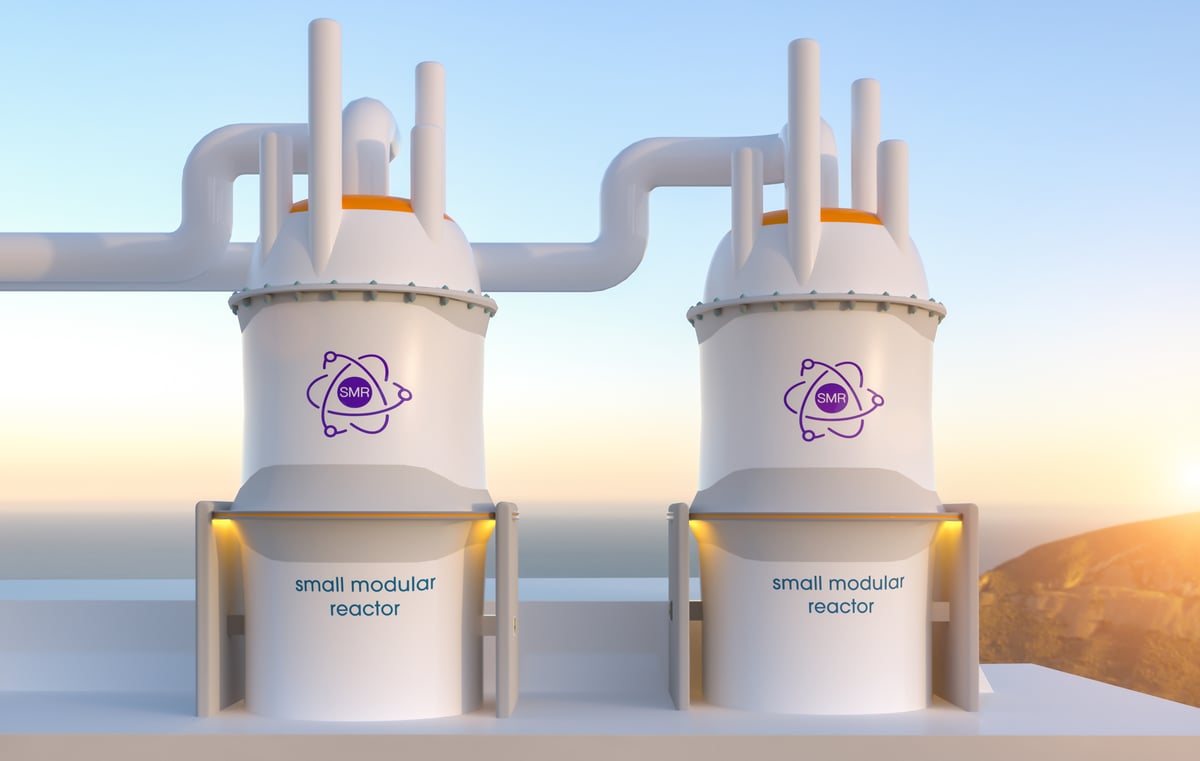
The Leading Edge of Nuclear Innovation
NuScale Power stands at an inflection point in the small modular reactor (SMR) industry, positioning itself as the closest competitor to actual field deployment of breakthrough nuclear technology. The company has achieved a critical regulatory milestone with Nuclear Regulatory Commission (NRC) approval, a prerequisite that separates it from a crowded field of aspiring SMR developers still in the conceptual phase. Adding to this competitive advantage, NuScale has secured a $400 million grant from the Tennessee Valley Authority (TVA), a substantial government commitment that underscores the viability of its technology pathway. Yet beneath these headline achievements lies a more complex reality: a company caught between transformative long-term potential and the near-term financial pressures of a technology still years away from commercial revenue generation.
Key Details: The Revenue Reality Check
Despite its technological leadership, NuScale's financial trajectory tells a cautionary tale for investors seeking near-term returns. The company has experienced declining quarterly revenue, particularly from its Romania project, which has become a notable source of financial volatility. This revenue contraction is emblematic of a broader challenge facing pre-commercial nuclear technology companies: the extended gap between development spending and actual market revenue.
The $400 million TVA grant represents a critical lifeline, but also illustrates how heavily NuScale depends on external capital infusions rather than organic revenue generation. The company's financial model currently relies on:
- Government grants and subsidies for technology development and deployment
- Investor capital to fund ongoing operations and commercialization efforts
- Engineering contracts from projects like Romania, which can fluctuate significantly
- Future licensing fees and project revenues once deployment accelerates
This capital structure, while not uncommon for early-stage technology companies, creates meaningful execution risk. Any delays in project timelines, regulatory approvals, or government funding could force difficult decisions around operational spending and dilution of shareholder equity.
Market Context: The SMR Gold Rush
The broader nuclear energy sector is experiencing a renaissance, driven by mounting pressure to decarbonize energy systems and meet growing electricity demand. Within this macro trend, small modular reactors have captured investor and regulatory enthusiasm as a potential solution to replace retiring coal plants and provide flexible, distributed nuclear capacity.
NuScale's competitive position appears strengthened by several factors:
- First-mover advantage: NRC approval puts it years ahead of competitors still navigating the licensing process
- Government backing: The TVA partnership represents institutional confidence in the technology
- Regulatory clarity: Having cleared NRC hurdles, execution risk shifts more toward commercialization than regulatory approval
However, the SMR sector also faces headwinds that investors must consider. Construction costs remain elevated, supply chain constraints persist in the nuclear sector, and financing large projects has proven challenging. Additionally, renewable energy costs continue declining, increasing the economic burden on SMR projects to demonstrate compelling cost advantages.
The broader energy market context also matters. As traditional utilities and energy companies increasingly pursue net-zero targets, demand for firm, low-carbon baseload power is expected to grow—potentially creating tailwinds for NuScale's business model. Yet execution on this vision has proven more difficult than anticipated across the energy technology sector.
Investor Implications: Spectulation or Strategic Opportunity?
For investors evaluating NuScale at price points below $20 per share, the investment profile is fundamentally one of risk capital allocation rather than stable value investing. Several considerations merit attention:
Positive factors supporting longer-term opportunity:
- Regulatory approval significantly de-risks the technology pathway relative to competitors
- Government and utility commitments suggest real demand for SMR capacity
- The energy transition creates structural demand for the solutions NuScale is developing
- First commercial deployments could validate the economic model and unlock subsequent projects
Risk factors demanding caution:
- Revenue visibility remains limited, with the company still pre-commercialization at scale
- Heavy dependence on government funding creates policy risk; changes in nuclear energy support could impact capital availability
- The Romania project revenue decline raises questions about project economics and customer demand at current pricing
- Capital requirements to reach profitability are likely substantial, increasing dilution risk
- Construction delays or cost overruns could materially impact project returns and investor confidence
The path to profitability for NuScale requires successful execution across multiple fronts: maintaining regulatory approval, securing additional government support and private contracts, managing construction timelines and costs, and demonstrating that SMR technology can compete economically with alternatives. Each represents a meaningful execution hurdle.
For institutional investors with long time horizons and elevated risk tolerance, NuScale might represent a strategic position in the energy transition. For retail investors seeking lower-risk opportunities, the company's current stage of commercialization suggests waiting for visibility on revenue growth and pathway to profitability.
The Long View: When Potential Meets Execution
NuScale Power occupies an enviable position as the most advanced SMR company in the world, yet that advancement masks significant remaining challenges before the company can rightfully claim commercial success. The $400 million TVA grant and NRC approval represent important validation, but represent enablers of the real work ahead: building functioning reactors on time, on budget, and at costs that customers will accept.
The investment thesis for NuScale ultimately hinges on a straightforward question: Can the company transition from technology developer to commercial operator generating steady, profitable revenue? At price points under $20, investors are betting that the answer is yes, and that the transition occurs within a reasonable timeframe. That remains a speculative wager in an industry where "soon" has historically meant a decade or more. For now, NuScale represents a long-term opportunity for risk-capital investors betting on the energy transition, not a conventional value investment or growth story with near-term catalysts.